

A good breakfast pizza brings together some of the best parts of a weekend breakfast: eggs, melted cheese, a crisp crust, and a few savory toppings. Instead of making each item separately, you can serve everything in slices that are easy to share.
This breakfast pizza recipe uses a ready-made pizza crust, scrambled eggs, cheddar cheese, and your choice of cooked bacon or sausage. Bell peppers and onions add color and a little crunch, while fresh chives give the finished pizza a bright flavor.
The recipe is straightforward enough for a busy morning, but it also works for a relaxed family brunch. Better still, you can change the toppings to use ingredients already sitting in your refrigerator.
A Note From Me: I wanted to keep this recipe simple, with everyday ingredients and enough flexibility to make it your own.
Easy Breakfast Pizza Recipe at a Glance
| Recipe Detail | Information |
| Prep time | About 10 minutes |
| Cooking time | About 15–17 minutes |
| Total time | About 30 minutes, including a short rest |
| Servings | 8 slices |
| Oven temperature | 400°F (200°C) |
| Best crust | One 12-inch, fully baked pizza crust |
| Main ingredients | Eggs, cheddar, bacon or sausage, vegetables |
Before you begin: These times assume you’re using a fully baked, ready-to-top pizza crust and already-cooked meat. Raw pizza dough or refrigerated pastry may need additional baking time.
Table of Contents
Ingredients for Breakfast Pizza With Eggs
You don’t need a long shopping list to make a flavorful breakfast pizza. The key is to use a sturdy crust, cook the eggs gently, and avoid piling on too many wet toppings.
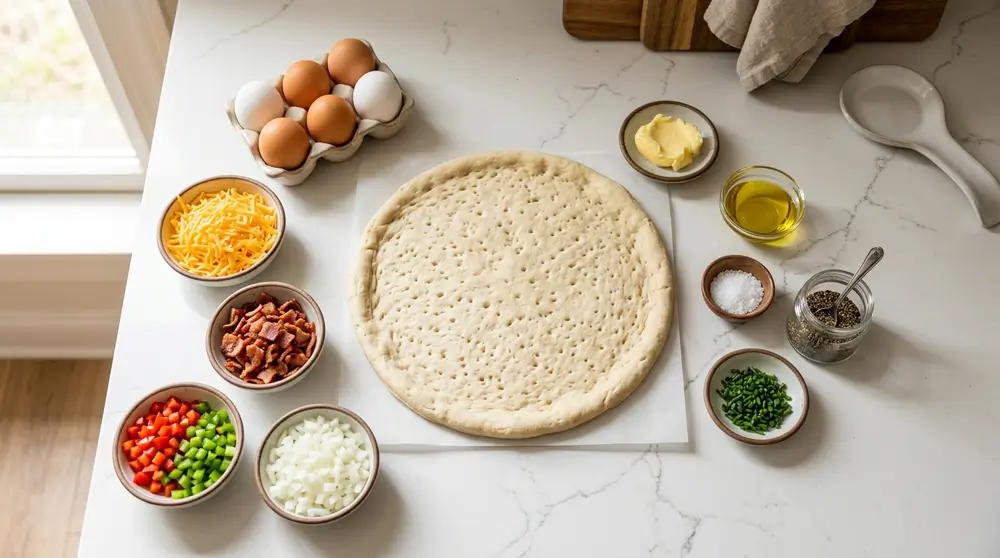
For the crust
- 1 fully baked, 12-inch pizza crust
- 1 tablespoon olive oil, for brushing the edges
For the eggs and toppings
- 6 large eggs
- 1 tablespoon butter
- 1 cup shredded cheddar cheese
- ½ cup cooked, crumbled bacon or breakfast sausage
- ¼ cup diced bell pepper
- ¼ cup finely diced onion
- Salt and black pepper, to taste
- 1–2 tablespoons chopped fresh chives or green onions, for serving
A few useful ingredient notes
Pizza crust: A ready-made crust is the easiest option because it only needs to heat through and become crisp. If you’re using raw dough, follow the package’s baking instructions and partially bake it before adding the toppings.
Cheddar cheese: For a richer, slightly tangy taste, go with sharp cheddar. If you prefer a gentler cheese flavor, mild cheddar or Monterey Jack are both good choices.
Bacon or sausage: Either option should be fully cooked before going onto the pizza. Drain excess grease so it doesn’t soak into the crust.
Vegetables: Dice the peppers and onions into small pieces so they heat through quickly. If you prefer softer onions, sauté them briefly before assembling the pizza.
How to Make Breakfast Pizza Step by Step
The method is simple: prepare the crust, cook the eggs, layer the toppings, and bake until everything is hot.
Step 1: Get the Oven Ready and Set Up Your Pizza Crust
Preheat your oven to 400°F (200°C).
Place the fully baked pizza crust on a baking sheet. Brush the outer edge with a small amount of olive oil to encourage browning.
If the crust is frozen, check the package for thawing instructions. For raw dough, bake it until the surface has started to set before adding the eggs and cheese. The exact time depends on the dough, so don’t rely on the same baking time used for a ready-made crust.
Helpful tip: A firm crust makes breakfast pizza easier to slice and keeps the toppings from weighing down the center.
Step 2: Cook the Scrambled Eggs
Break the eggs into a mixing bowl, add a small pinch of salt and black pepper, then whisk until the mixture has an even color and consistency.
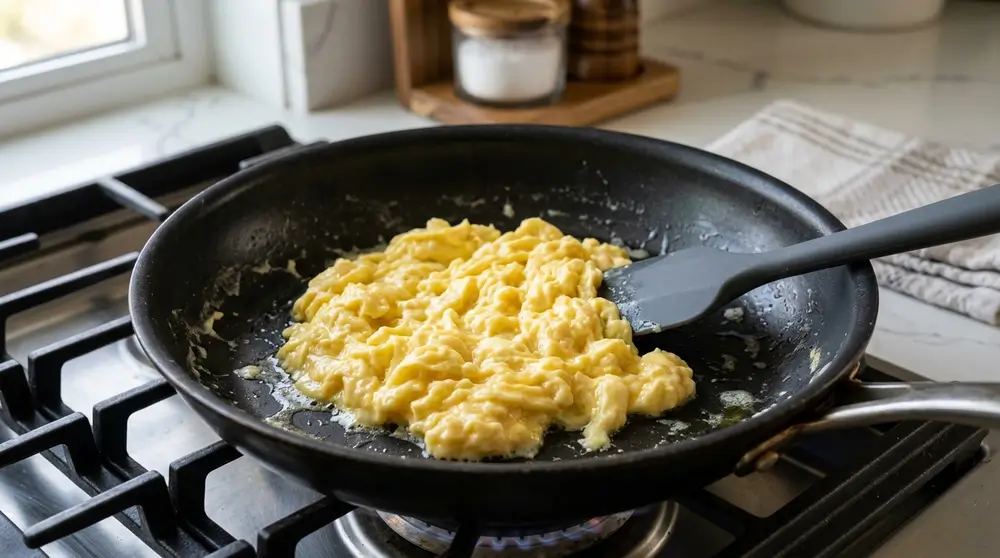
Melt the butter in a nonstick skillet over medium-low heat. Pour the whisked eggs into the warm skillet, then slowly move them around the pan with a spatula.
Cook until the eggs form soft curds and there is no pool of liquid egg remaining. Remove the pan from the heat before the eggs become dry, since they will continue heating in the oven.
The finished pizza should contain fully cooked eggs, not runny eggs. For a closer look at the technique, the American Egg Board offers a helpful guide to making scrambled eggs.
Step 3: Assemble the Breakfast Pizza
Spread the scrambled eggs across the crust, leaving a narrow border around the edge.
Add the cooked bacon or sausage, then sprinkle on the diced bell pepper and onion. Finish with the shredded cheddar.
Try to distribute the toppings evenly. If one section has much more filling than another, the pizza can be harder to cut and serve.
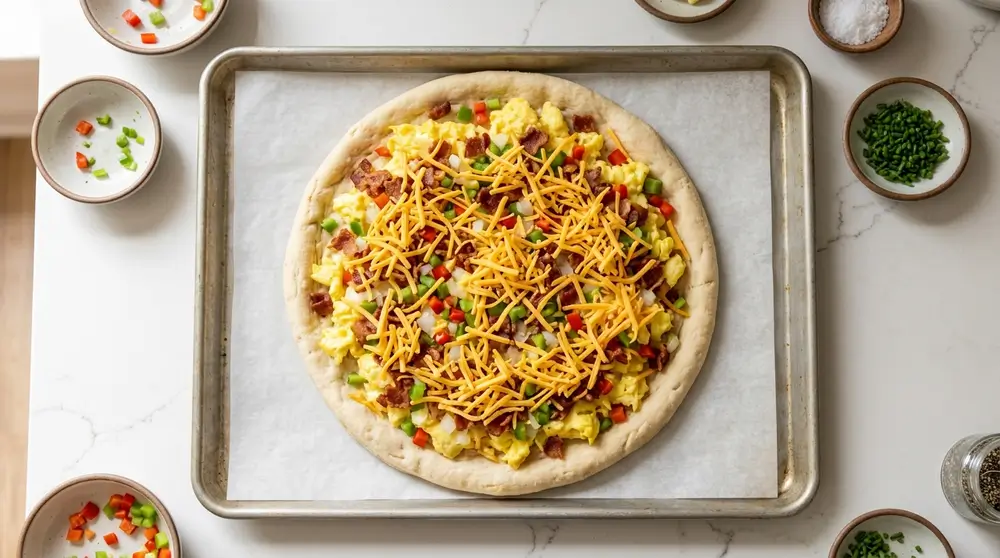
Why there’s no pizza sauce: Scrambled eggs and melted cheese provide enough moisture and richness for this version. Leaving out tomato sauce also helps keep the crust from becoming soft.
Step 4: Bake Until Hot and Golden
Place the assembled pizza in the preheated oven.
After about 10 minutes, take a look at the pizza to see if it needs another minute or two in the oven. The cheese should be melted, the toppings hot, and the crust lightly browned around the edges.
Cooking times vary with crust thickness and oven performance. Make sure the eggs are fully cooked; USDA guidance recommends 160°F (71°C) for egg dishes.
If the cheese is browning before the center is hot, loosely cover the pizza with foil and continue heating as needed.
Step 5: Rest, Slice, and Serve
Once the pizza is ready, remove it from the oven and give it a couple of minutes to cool slightly before slicing.
Sprinkle fresh chives or green onions over the top. Cut into eight slices and serve while the cheese is warm.
A pizza cutter works well, although a sharp kitchen knife may be easier if your toppings are particularly thick.

How to Keep Breakfast Pizza From Getting Soggy
A crisp crust makes a noticeable difference. Most soggy breakfast pizzas come down to excess moisture rather than a problem with the oven.
Here are a few ways to avoid it.
Start with a sturdy base. A fully baked pizza crust is less likely to become soft than raw dough placed directly under the toppings.
Cook watery vegetables first. Mushrooms, spinach, and tomatoes can release moisture as they heat. Sauté mushrooms and spinach briefly, then drain any liquid before adding them. For tomatoes, remove some of the seeds.
Drain cooked meat. Bacon and sausage can leave behind grease that collects on the crust. Transfer them to a paper towel before using.
Keep the toppings balanced. More ingredients don’t necessarily make a better pizza. A moderate, even layer heats more consistently.
Serve soon after baking. Pizza gradually loses some crispness as it sits, especially when covered while still steaming.
If you’re experimenting with toppings, make one change at a time. That makes it easier to work out which ingredients give you the texture you enjoy.
Breakfast Pizza Toppings and Variations
One of the advantages of homemade breakfast pizza is that there isn’t just one combination that works.
Classic Bacon and Cheddar
Use the ingredients in the main recipe: scrambled eggs, cooked bacon, cheddar, onion, and bell pepper.
This combination is a good starting point because the salty bacon balances the mild eggs and vegetables.
Sausage and Pepper Breakfast Pizza
Replace the bacon with fully cooked breakfast sausage.
Add extra bell peppers and use a mixture of cheddar and Monterey Jack for a milder, stretchy cheese topping.
Vegetarian Breakfast Pizza
Skip the bacon or sausage and add cooked mushrooms, spinach, and diced peppers.
Squeeze excess moisture from the spinach before using it. You can also add a little crumbled feta for a tangier flavor.
Spinach and Tomato Breakfast Pizza
Combine cooked spinach, small pieces of tomato, and mozzarella.
Use tomatoes sparingly so they don’t release too much liquid onto the crust. A pinch of dried oregano or black pepper works nicely with this combination.
Spicy Breakfast Pizza
Add sliced jalapeños and pepper Jack cheese.
Serve with a little hot sauce on the side so everyone can adjust the heat to their preference.
Which Pizza Crust Should You Use?
Different crusts produce noticeably different results.
| Crust Type | What to Expect | Important Note |
| Fully baked pizza crust | Firm, familiar pizza texture | Best for the quick version |
| Raw pizza dough | Chewier and more bread-like | Partially bake first; cooking time increases |
| Crescent roll dough | Soft, buttery base | Follow the package instructions |
| Large flour tortilla | Thin and crisp | Use fewer toppings and shorten baking time |
| Gluten-free pizza crust | Depends on the brand | Follow the manufacturer’s directions |
For a first attempt, a fully baked pizza crust is the simplest choice. It handles the weight of the eggs and cheese without requiring much extra preparation.
Easy Ways to Customize the Recipe
You can change the ingredients to suit different preferences without learning a completely new method.
For a meat-free version: Let the eggs and cheese take center stage without adding any breakfast meat. Add cooked vegetables or beans that have been drained well.
For a dairy-free version: Swap the butter for olive oil when scrambling the eggs, and choose a plant-based cheese that melts well. Check the crust’s ingredient label as well.
For a gluten-free version: Choose a certified gluten-free crust and check packaged meats and seasonings for ingredients that may contain gluten.
For a vegetable-forward pizza: Reduce the meat and add more sautéed mushrooms, peppers, or spinach.
For a kid-friendly pizza: Cut the vegetables into small pieces, choose a cheese with a gentle flavor, and leave any spicy sauces or toppings on the side.
Ingredient substitutions can change the cooking time, texture, and nutritional content. Check the pizza as it bakes rather than assuming every variation will behave exactly like the original.
What to Serve With Breakfast Pizza
Breakfast pizza can be a complete meal on its own, but a simple side dish can make it more suitable for brunch.
Fresh fruit, such as berries, orange slices, or melon, adds a refreshing contrast to the cheese and eggs. If you’re planning a late-morning brunch, a small bowl of leafy greens with a light dressing makes a nice addition to the table.
For a larger breakfast, pair a slice with roasted potatoes or sautéed vegetables. Coffee, tea, and freshly squeezed juice are straightforward drink options.
You can also put out small bowls of chopped chives, hot sauce, or salsa so everyone can finish their own slice. Keep the sauces off the pizza until serving so the crust doesn’t absorb extra moisture.
Can You Make Breakfast Pizza Ahead of Time?
Yes. A little preparation in advance can make breakfast much easier without having to assemble the entire pizza ahead of time.
The evening before, you can cook and crumble the bacon, dice the vegetables, and shred the cheese. Keep everything refrigerated in covered containers.
When you’re ready to eat, scramble the eggs, assemble the pizza, and bake it.
This approach keeps the crust from absorbing moisture overnight and allows the eggs to be prepared fresh.
For an even quicker breakfast, you can bake the pizza in advance and reheat individual slices. Just be aware that reheated crust may have a different texture than freshly baked pizza.
If you prefer a breakfast you can assemble the night before, our Easy Breakfast Egg Casserole Recipe is another option worth exploring.
How to Store and Reheat Leftover Breakfast Pizza
Leftover breakfast pizza needs careful storage to keep it safe to eat, especially when it’s made with eggs, dairy, or meat.
In the refrigerator
Refrigerate the slices promptly in shallow, covered containers. Discard any pizza left at room temperature for more than two hours, or more than one hour if the temperature is above 90°F (32°C).
Use refrigerated leftovers within 3–4 days.
In the freezer
Once the pizza has cooled, separate the slices and pack each one securely before placing them in an airtight, freezer-safe container. Label the container with the date.
For best quality, aim to use frozen slices within about 1–2 months. This is a quality recommendation, not a strict food-safety expiration date for food kept continuously frozen.
Reheating
To bring back some of the crust’s crunch, place the leftover slices in an oven heated to 350°F (175°C) and let them warm through. The time will depend on the slice thickness and whether it’s refrigerated or frozen.
A skillet over medium-low heat also works. Cover it briefly to help the cheese warm through, then uncover it to allow moisture to escape.
For food safety, reheat leftovers to 165°F (74°C).
For detailed guidance, see the USDA’s food safety recommendations.
Common Breakfast Pizza Mistakes to Avoid
Even simple recipes can turn out differently than expected. These are the problems worth watching for.
Adding Raw Dough and Expecting a 12-Minute Bake
A fully baked crust and raw pizza dough are not interchangeable. Raw dough needs enough time to cook all the way through, and a thick layer of toppings can slow that process.
If you’re starting with raw dough, partially bake it and follow its package directions.
Cooking the Eggs Until They’re Dry
Scrambled eggs can become firm and crumbly when cooked too long on the stove and then baked again.
Use moderate heat and remove the eggs once they’re softly set. Finish cooking them thoroughly in the oven.
Adding Too Many Wet Vegetables
Fresh tomatoes release juice as they bake, while mushrooms and spinach can add more moisture than the pizza crust can handle.
Cook or drain moisture-heavy toppings first and use a moderate amount.
Forgetting to Cook the Meat
Raw sausage or bacon should not be added to this quick version with the expectation that a short bake will cook it safely.
Cook the meat fully before assembling the pizza.
Cutting the Pizza Immediately
Freshly melted cheese can pull the toppings away from the crust when you slice it.
A short rest makes the pizza easier to portion without leaving the finished dish sitting out for too long.
Frequently Asked Questions
Can I Make This Breakfast Pizza Without Bacon or Sausage?
Absolutely. Scrambled eggs, cheese, and vegetables make a satisfying combination. If you’re adding spinach or mushrooms, give them a quick sauté and drain away any extra liquid before putting them on the pizza.
How long does breakfast pizza take to make?
With a fully baked crust and cooked meat, plan on approximately 30 minutes, including preparation, stovetop cooking, baking, and a brief rest. Raw dough or additional toppings may increase the total time.
Can I use a tortilla instead of pizza crust?
Yes. A large flour tortilla makes a thinner, lighter base. Use a smaller quantity of toppings, watch it closely in the oven, and remove it once the edges are crisp and everything is thoroughly heated.
Do I need pizza sauce for breakfast pizza?
No pizza sauce is needed here. The layer of scrambled eggs and melted cheese gives the pizza its flavor and richness without an extra sauce. If you enjoy salsa or hot sauce, adding a little when serving is an easy way to introduce extra flavor without softening the crust during baking.
Can I use mozzarella instead of cheddar?
Yes. Mozzarella gives the pizza a milder taste and a stretchy melted texture. You can also combine mozzarella and cheddar to get both qualities.
How Can I Tell When My Breakfast Pizza Is Fully Cooked?
The cheese should be melted, the crust heated through, and the eggs fully cooked. Egg dishes should reach a safe temperature of 160°F (71°C). If you’re uncertain, check the center with a food thermometer.
Can I freeze leftover breakfast pizza?
Yes. Freeze fully cooked, cooled slices in airtight packaging. For the best taste and texture, enjoy the frozen slices within 1–2 months, making sure they reach an internal temperature of 165°F (74°C) when reheated.
Final Thoughts
A homemade breakfast pizza doesn’t need complicated ingredients or a long morning in the kitchen. With a ready-made crust, eggs, cheese, and a few toppings, you can put together a meal that’s easy to customize and convenient to share.
The most useful things to remember are simple: start with the right crust, cook the meat before adding it, control moisture from vegetables, and make sure the eggs are cooked through.
Once you’re comfortable with the basic method, try different cheeses, vegetables, and seasonings to find the combination that suits your household.
Looking for more ideas for your morning meals? Browse our Breakfast Recipes for more inspiration.
Leave a Reply