
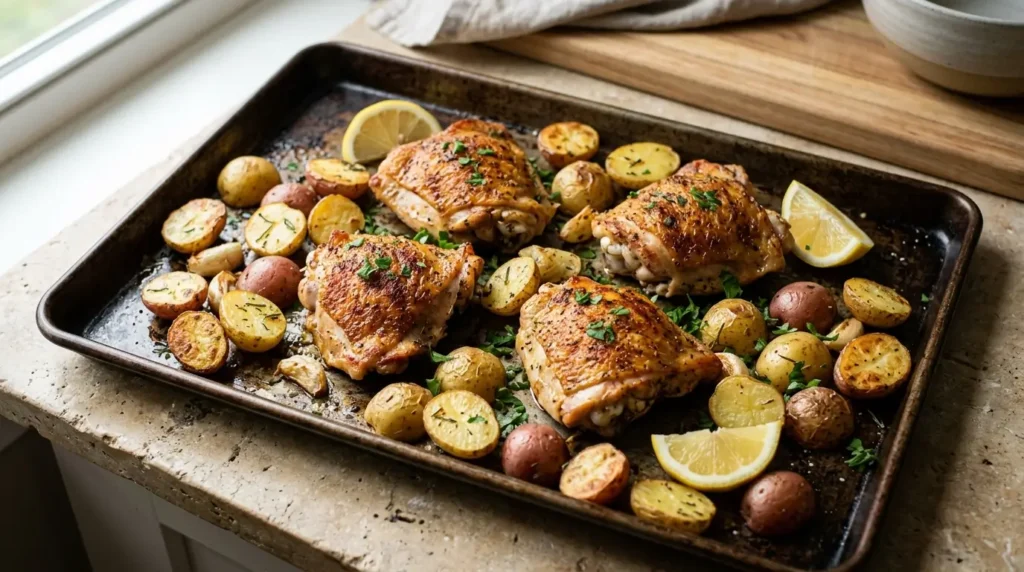
Some evenings, making dinner is less about trying something complicated and more about getting a good meal on the table without creating a pile of dishes. That’s where this sheet pan chicken and potatoes recipe comes in.
With chicken thighs, baby potatoes, olive oil, and a handful of seasonings, you can make a hearty dinner using one baking sheet for the main cooking. The chicken roasts until golden, while the potatoes become tender with lightly crisp edges.
This easy sheet pan chicken and potatoes recipe is a practical choice for a family dinner or a weekend meal when you’d rather keep things simple. You don’t need a complicated sauce or unusual ingredients. The most important details are giving everything enough space and checking that the chicken is thoroughly cooked.
Table of Contents
Sheet Pan Chicken and Potatoes at a Glance
| Recipe Detail | Information |
| Preparation time | About 15 minutes |
| Cooking time | Approximately 40–50 minutes |
| Resting time | About 5 minutes |
| Total time | About 60–70 minutes |
| Servings | 4 |
| Oven temperature | 425°F (220°C) |
| Main ingredients | Chicken thighs, baby potatoes, olive oil, herbs, and garlic |
| Equipment | Large rimmed baking sheet and food thermometer |
Before you begin: These times are estimates for medium-sized, bone-in chicken thighs. Larger pieces may take longer. Always check the chicken’s internal temperature rather than relying only on the clock.
Why This One-Pan Chicken and Potatoes Dinner Works
A good one-pan dinner should be convenient without feeling like a compromise. Roasting the chicken alongside the potatoes lets you prepare both parts of dinner on a single baking sheet.
There are a few reasons the ingredients work well together:
- Chicken thighs handle roasting well. Their natural fat helps keep the meat juicy, while the skin turns golden and lightly crisp in the oven.
- Baby potatoes hold their shape. Yukon Gold and red potatoes are good choices because they become tender without falling apart easily.
- The seasoning is straightforward. Smoked paprika, thyme, rosemary, and garlic add flavor without requiring a long marinade.
- Cleanup stays manageable. The chicken and potatoes roast on the same baking sheet, so you don’t need separate cooking pans for each part of the meal.
The recipe is also flexible. A little fresh lemon juice, a different mix of herbs, or a side of seasonal vegetables can give this meal a new flavor without making dinner more complicated.
Ingredients for Sheet Pan Chicken and Potatoes
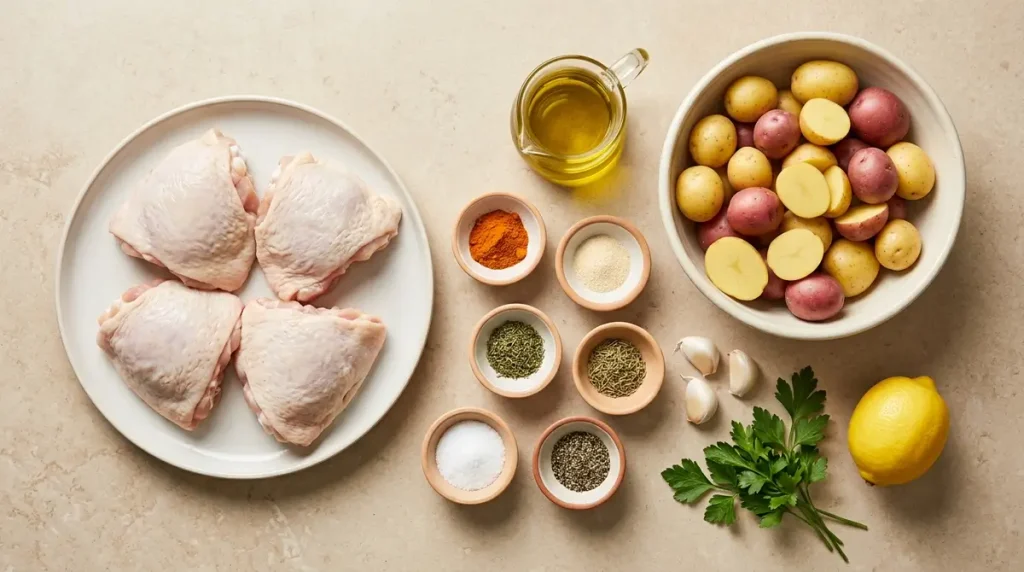
Chicken and potatoes are the main items you’ll need to buy, while the oil, herbs, and spices may already be in your kitchen. Choosing chicken pieces of a similar size and cutting the potatoes evenly will make cooking easier.
For the Chicken
- 4 bone-in, skin-on chicken thighs (about 2 pounds total): Medium-sized pieces work well for the roasting method below.
- 2 tablespoons olive oil: Helps the spices stick to the chicken and gives the skin a better chance to turn golden as it roasts.
- 1 teaspoon smoked paprika: Gives the seasoning a subtle smoky touch and helps create an appetizing reddish-gold finish.
- 1 teaspoon garlic powder: Blends easily with the other spices, so the garlic taste reaches every part of the chicken.
- ½ teaspoon dried thyme: Brings a mild, earthy flavor that complements the smoked paprika and garlic.
- ½ teaspoon fine salt: Adjust according to your preference.
- ¼ teaspoon black pepper: For seasoning.
For the Potatoes
- 1½ pounds baby potatoes: Yukon Gold or red potatoes, halved or cut into approximately 1-inch pieces.
- 2 tablespoons olive oil: Helps the potatoes roast and brown.
- 1 teaspoon dried rosemary: Crush it lightly before using.
- 3 garlic cloves, minced: Added near the end of roasting.
- ½ teaspoon fine salt: Adjust to taste.
- ¼ teaspoon black pepper: For seasoning.
Optional Garnishes
- Fresh parsley, chopped
- Lemon wedges
- A pinch of red pepper flakes
Ingredient Notes and Substitutions
Chicken: The roasting instructions in this recipe are designed for chicken thighs with the bone still in. Boneless thighs and chicken breasts can also work, but their cooking times are different.
Potatoes: Small Yukon Gold or red potatoes are ideal. Larger potatoes work too, provided you cut them into similar-sized pieces.
Olive oil: The recipe uses four tablespoons in total. You may use slightly less if preferred, although the finished texture may change.
Garlic: Fresh minced garlic can burn when exposed to high oven heat for too long. Adding it during the final part of roasting helps preserve its flavor.
Herbs: If you don’t have rosemary or thyme, a small amount of dried Italian seasoning is another option.
How to Make Sheet Pan Chicken and Potatoes
These oven baked chicken and potatoes come together in five main steps. Take a few minutes to prepare everything properly before the baking sheet goes into the oven.
Step 1: Prepare the Oven and Baking Sheet
Preheat your oven to 425°F (220°C).
Choose a large rimmed baking sheet. A standard 18 × 13-inch half-sheet pan is a useful size for four chicken thighs and the potatoes.
Lightly oil the baking sheet or line it with aluminum foil for easier cleanup. If you use parchment paper, check its manufacturer’s maximum recommended temperature.
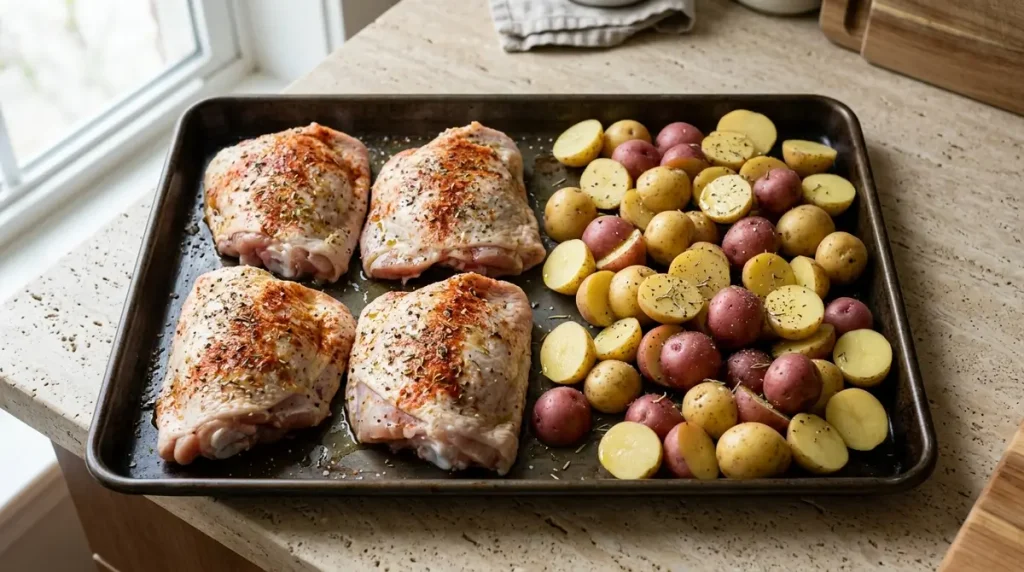
Keep the chicken pieces apart and spread the potatoes beside them, rather than letting the ingredients pile up. If the baking sheet feels too crowded, divide the ingredients between two pans.
Helpful tip: A crowded pan traps moisture, which makes it harder for the potatoes and chicken skin to brown.
Step 2: Season the Potatoes
Wash the baby potatoes and dry them well.
Cut them in half, or into roughly 1-inch pieces if some are larger than others. That way, you’re less likely to end up with mushy potato pieces mixed with larger chunks that are still firm inside.
Place the potatoes in a large bowl. Add:
- 2 tablespoons olive oil
- 1 teaspoon dried rosemary
- ½ teaspoon fine salt
- ¼ teaspoon black pepper
Toss until the potatoes are evenly coated.
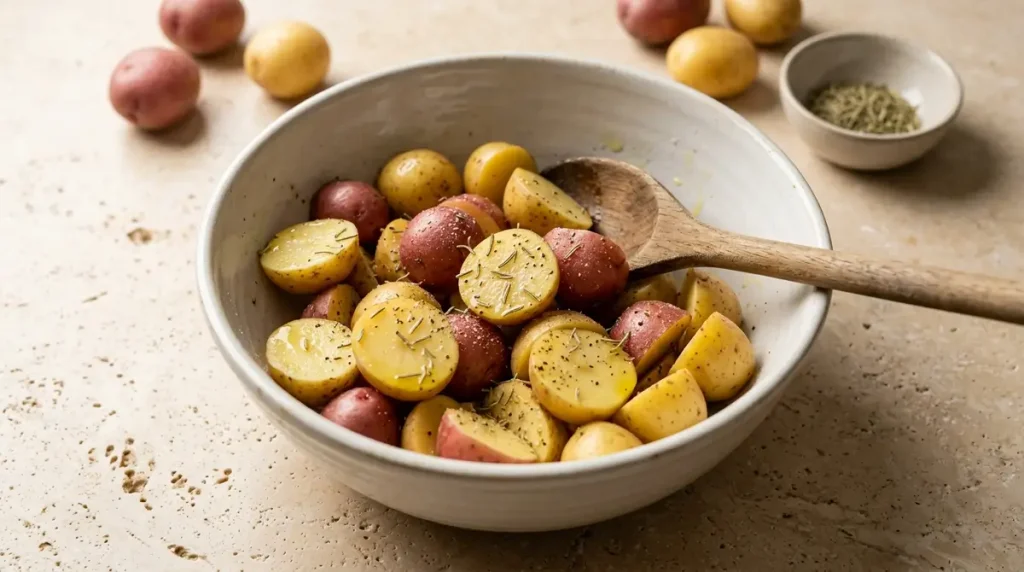
Transfer the seasoned potatoes to one side of the baking sheet, arranging them so the pieces don’t overlap. Where possible, place the cut sides against the pan.
Leave space for the chicken thighs.
Step 3: Season the Chicken Thighs
Take the chicken thighs out of the package and use paper towels to gently blot away any moisture from the skin. There’s no need to wash raw chicken.
Rub the thighs with 2 tablespoons olive oil. Sprinkle the smoked paprika, garlic powder, and thyme over the chicken, followed by ½ teaspoon of salt and ¼ teaspoon of black pepper.
Coat the chicken evenly, including the underside.
Set the seasoned chicken thighs beside the potatoes, making sure the skin side of each piece faces upward. Keep a little space between the pieces.
Wash your hands and clean any utensils or surfaces that touched raw chicken before handling other food.
Helpful tip: Dry skin browns more easily than wet skin. Avoid placing the potatoes directly underneath the chicken, where they can become softer from the drippings.
Step 4: Roast Until Golden and Fully Cooked
Once the oven is hot, slide the baking sheet onto the center rack.
Roast for approximately 40–50 minutes, depending on the size of the thighs, the potatoes, and your oven.
Rotate the baking sheet after about 20–25 minutes to encourage even browning.
After about 35 minutes in the oven, begin checking for doneness. Place the tip of a food thermometer in the thickest part of a chicken thigh, making sure it stays clear of the bone.
The chicken must reach a minimum internal temperature of 165°F (74°C).
About 10 minutes before the expected end of cooking, carefully add the minced garlic to the potatoes. Gently toss the potatoes with the garlic, using a clean utensil, then return the pan to the oven.
The potatoes are ready when they are tender enough to pierce easily with a fork and have golden edges.
If the chicken reaches a safe temperature before the potatoes are done, transfer it to a clean plate and allow the potatoes to roast a little longer. If the chicken skin is browning too quickly but the meat still needs cooking, loosely cover it with foil.
Important: Oven times are estimates. A food thermometer is the most reliable way to confirm that the chicken is safely cooked.
Step 5: Let It Rest and Serve
Once the chicken has reached its safe internal temperature and a fork slides easily into the potatoes, carefully take the baking sheet out of the oven.
Give the chicken about five minutes to rest before serving, allowing the juices to settle inside the meat.
Sprinkle chopped parsley over the finished dish, and add lemon juice if you like a brighter flavor.
Divide the chicken and potatoes among four plates. Serve warm with a salad or another simple side.
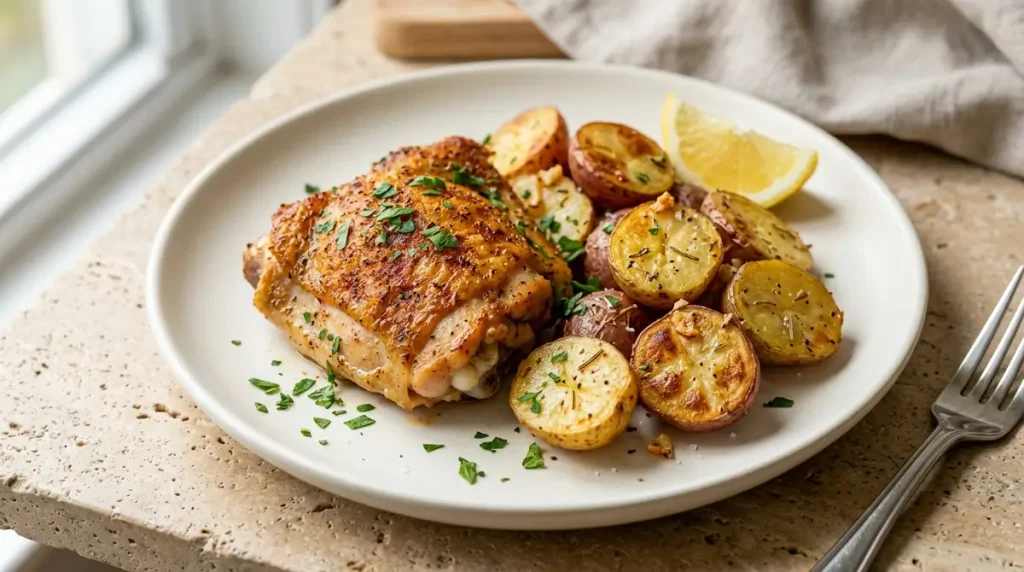
How to Get Crispy Potatoes and Juicy Chicken
A few small details can make a noticeable difference to the finished meal.
Give Everything Enough Space
Spread the chicken and potatoes in one layer. Overcrowding allows moisture to collect and can leave the potatoes soft rather than lightly crisp.
Keep the Potato Pieces Similar in Size
When the potato pieces vary too much in thickness, some can become overly soft before the thicker ones have cooked through.
Dry the Chicken Before Seasoning
Patting the chicken skin dry helps it brown more effectively in the oven. It also makes it easier to spread the oil and seasonings across the surface.
Don’t Add Fresh Garlic Too Early
Garlic adds plenty of flavor, but finely minced pieces can burn in a 425°F oven. Adding them during the last 10 minutes is a better starting point.
Check the Chicken Temperature
A golden exterior doesn’t always mean the center is ready. Measure the internal temperature in the thickest part of each unusually large piece, avoiding the bone.
Troubleshooting: Common Problems and Easy Fixes
If your chicken or potatoes don’t turn out the way you expected, these are the first things worth checking.
| Problem | Possible Reason | What to Do |
| Potatoes are still firm | Pieces are too large or need more time | Cut them smaller next time, or continue roasting until fork-tender |
| Chicken skin isn’t crispy | Surface moisture or overcrowding | Pat the chicken dry and leave more room on the pan |
| Garlic tastes bitter | Minced garlic burned | Add fresh garlic near the end of roasting |
| Chicken is ready before the potatoes | Chicken and potatoes cook at different speeds | Remove the cooked chicken and continue roasting the potatoes |
| Potatoes look pale | Too much moisture or poor contact with the pan | Dry the potatoes and place some cut sides against the baking sheet |
| Chicken seems dry | It may have cooked longer than necessary | Start checking the chicken before the estimated cooking time is up, and remove it once the thickest part reaches 165°F (74°C). |
The size of your chicken thighs and the thickness of the potato pieces can affect how long they need in the oven. Adjusting the cooking time based on what you see, while checking food safety carefully, will give you more consistent results.
Easy Variations to Try
Once you’re comfortable with the basic recipe, it’s easy to adjust the flavor without changing the whole cooking method.
Lemon Herb Chicken and Potatoes
Mix a small amount of finely grated lemon zest into the paprika, garlic powder, and thyme before seasoning the chicken. Finish with fresh lemon juice and chopped parsley.
Garlic Parmesan Potatoes
Sprinkle finely grated Parmesan over the potatoes after roasting. Toss gently while they are still warm.
Spicy Sheet Pan Chicken
Mix a small pinch of cayenne pepper or red pepper flakes into the chicken seasoning.
Keep the amount modest at first, especially if you’re cooking for people who prefer mild food.
Chicken and Roasted Vegetables
Broccoli, carrots, and green beans are all good additions to this meal. The key is knowing when to put each vegetable in the oven so it doesn’t become too soft or remain undercooked.
Add quick-cooking vegetables such as green beans during the final 10–15 minutes. Broccoli may need around 15–20 minutes, depending on the size of the florets. For carrots, thin slices or small chunks work best. If you prefer larger pieces, add them earlier so they have enough time to become tender.
If adding vegetables makes the baking sheet crowded, use a second pan.
A Lighter Variation
Skinless chicken thighs are an option if you prefer not to eat the skin. You can also reduce the olive oil slightly.
Keep in mind that the chicken won’t develop the same crispy exterior, and its cooking time may change.
Can You Use Chicken Breasts Instead of Thighs?
Yes, but it’s important to adjust the cooking method.
Boneless chicken breasts often cook faster than bone-in thighs. If you roast them for the full time in this recipe, they may become dry before the potatoes are ready.
A better approach is to start roasting the seasoned potatoes first.
After approximately 20–25 minutes, add the seasoned chicken breasts to the baking sheet. Continue roasting until the chicken reaches 165°F (74°C) internally.
Thicker chicken breasts usually need more time in the oven, so keep an eye on their internal temperature as they cook.
If the chicken is ready while the potatoes still need a few minutes, remove the chicken to a clean plate and finish roasting the potatoes.
This approach makes the timing more flexible and helps prevent overcooking.
Nutritional Notes
This dinner combines chicken with potatoes, olive oil, and herbs.
The chicken contributes protein, while the potatoes provide carbohydrates and some fiber. Olive oil and chicken skin contribute fat.
The nutritional content can vary considerably depending on:
- The size and edible portion of each chicken thigh
- Whether the skin is eaten
- How much olive oil remains on the food
- The amount of salt added
- The final serving size
For that reason, this recipe doesn’t include an exact calorie count without a verified calculation for the ingredients and portions used.
If you’re tracking specific nutrients, you can look up ingredient information in the USDA’s FoodData Central database and calculate the amounts for your own portions.
Simple Side Dishes That Go Well With Chicken and Potatoes
Chicken and potatoes make a filling main meal, but a simple side can bring extra freshness to the plate.
A green salad with a light vinaigrette works well, especially if you want something crisp alongside the roasted potatoes.
Steamed green beans, sautéed spinach, or lightly cooked broccoli are also good choices.
For a simple sauce, mix plain Greek yogurt with lemon juice, chopped dill, and black pepper. Keep the yogurt sauce in a separate bowl, allowing everyone to add it to their plate without softening the roasted chicken skin.
If you’re serving the meal family-style, transfer the chicken and potatoes to a large platter and scatter parsley and lemon wedges around the edges.
There’s no need to add several complicated side dishes. One fresh vegetable or salad is usually enough.
Make-Ahead Tips for Chicken and Potatoes
Preparing a few ingredients ahead of time can make this dinner easier to put together on a busy evening.
You can season the chicken ahead of time and keep it covered in the refrigerator for up to 24 hours, as long as it stays within the safe refrigerated storage period for raw poultry.
Washing the potatoes earlier in the day is another small task you can get out of the way before dinner.
If you want to cut the potatoes the night before, cover them with cold water and keep them in the refrigerator. Drain and dry them thoroughly before roasting so excess moisture doesn’t interfere with browning.
Wait until you’re ready to cook before arranging the raw chicken and potatoes together on the baking sheet.
Do not leave raw chicken at room temperature while preparing the other ingredients.
How to Store and Reheat Leftovers
Leftover one pan chicken and potatoes can make a convenient meal the next day, provided they’re stored properly.
Refrigerating Leftovers
Transfer the cooked chicken and potatoes into shallow, covered containers and refrigerate promptly.
Refrigerate within 2 hours after cooking, or within 1 hour if the surrounding temperature is above 90°F (32°C).
Use refrigerated leftovers within 3–4 days.
Freezing Leftovers
Divide the cooked chicken and potatoes into smaller portions, transfer them to shallow, airtight freezer-safe containers, and freeze promptly rather than leaving them on the counter to cool completely.
For the best texture, aim to use the portions within about 2–3 months. Once reheated, the potatoes might lose some of their original firmness and crispy edges.
This timeframe is a quality recommendation, not a strict food-safety expiration date for food kept continuously frozen.
Reheating Chicken and Potatoes
An oven can help restore some of the potatoes’ roasted texture.
Place the leftovers in an oven-safe dish and warm at approximately 350°F (175°C), checking them as they heat.
Cooking time depends on the portion size and whether the food was refrigerated or frozen.
Reheat leftovers to 165°F (74°C) before serving.
For more detailed instructions, see the USDA’s guidance on leftovers and food safety.
Frequently Asked Questions
Can I use boneless chicken thighs?
Yes. Without the bone, these chicken thighs generally need less time in the oven. Check them earlier and make sure the center reaches 165°F (74°C).
Give the potatoes some time in the oven on their own before placing the seasoned boneless chicken thighs on the baking sheet.
What are the best potatoes for this recipe?
Baby Yukon Golds and small red potatoes are both suitable choices for roasting alongside the chicken. Their thin skins help them stay intact in the oven, while the insides become soft and creamy.
Larger potatoes can work too, but cut them into similar-sized pieces.
Why aren’t my potatoes crispy?
They may have been too wet, cut too large, or crowded on the baking sheet.
Dry them well, keep the pieces evenly sized, and leave enough room for them to roast.
Can I add broccoli or green beans?
Yes. Add quicker-cooking vegetables later in the roasting process so they don’t become overly soft while the chicken finishes.
How Do I Check That My Chicken Is Cooked Safely?
Use a food thermometer to check the thickest part of a thigh without touching the bone.
The internal temperature must reach at least 165°F (74°C). Even when the outside looks nicely browned, the chicken may still need more time to cook through.
Can I make this recipe with sweet potatoes?
Yes. Sweet potatoes can replace some or all of the baby potatoes.
Cut them into evenly sized pieces and check their texture during roasting, since their cooking characteristics are different.
Is this recipe gluten-free?
The basic ingredients don’t normally contain gluten. However, if you need to avoid gluten strictly, check packaged spices and any added sauces for gluten-containing ingredients or cross-contact warnings.
Can I freeze leftover chicken and potatoes?
Yes. Divide the cooked chicken and potatoes into individual servings, place them in airtight, freezer-safe containers, and freeze them promptly.
For the best texture, try to use them within 2–3 months, and reheat thoroughly to 165°F (74°C).
Final Thoughts
Making sheet pan chicken and potatoes doesn’t require a long list of ingredients or several pans on the stove. You only need to spend a little time preparing the chicken and potatoes before letting them roast, checking on them occasionally as they cook.
The main things to remember are simple: cut the potatoes evenly, leave room on the baking sheet, add fresh garlic toward the end, and always check the chicken’s internal temperature.
You can keep the recipe as written or make small changes with different herbs, vegetables, and finishing sauces.
If you’re looking for another easy chicken dinner, try our Easy Cuban Chicken and Rice Recipe for a Cuban-inspired one-skillet meal with rice, peppers, and citrus.
If you make this dish, feel free to share which seasonings or side dishes you chose in the comments.
Leave a Reply