

Soft rolls, fluffy eggs, savory sausage, crispy bacon, and melted cheddar come together in these ultimate breakfast sliders. Keep the rolls connected while adding the fillings, then bake them together and cut them into twelve individual portions before serving.
A light maple-Dijon butter topping adds a sweet and savory finish, making these sliders a convenient choice for weekend brunch, holiday mornings, or family breakfasts.
The key is to cook the fillings thoroughly and remove excess grease before assembly. With less excess moisture in the filling, the bottom rolls can hold their shape better when the sliders are served.
Ultimate Breakfast Sliders at a Glance
| Recipe Detail | Information |
| Category | Breakfast |
| Yield | 12 sliders |
| Servings | Approximately 6 |
| Prep Time | About 20–25 minutes |
| Stovetop Cooking | About 15–20 minutes |
| Oven Time | About 15–20 minutes |
| Oven Temperature | 350°F (175°C) |
| Baking Dish | 9 × 13 inches |
Timing note: The preparation and cooking times are approximate, as this recipe has not yet been tested in a kitchen. Check the filling temperatures rather than relying on the clock alone.
Table of Contents
Ingredients for Ultimate Breakfast Sliders
For the Breakfast Sliders
- 12 connected Hawaiian-style dinner rolls
- 12 oz (340 g) raw pork breakfast sausage
- 6 slices bacon
- 8 large eggs
- 2 tablespoons milk
- 1 tablespoon unsalted butter
- 1½ cups (about 170 g) shredded sharp cheddar cheese, divided
- ¼ teaspoon black pepper
- A small pinch of salt, if needed
For the Maple-Dijon Butter Topping
- 2 tablespoons unsalted butter, melted
- 1 teaspoon maple syrup
- ½ teaspoon Dijon mustard
- ¼ teaspoon garlic powder
- 1 teaspoon poppy seeds, optional
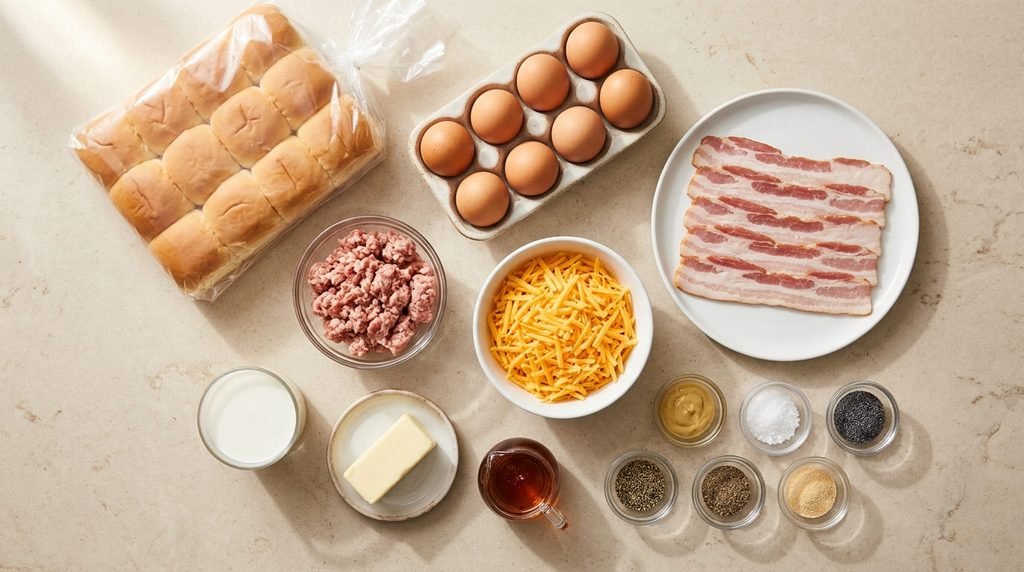
Ingredient tip: The mild sweetness of Hawaiian rolls creates a pleasant contrast with the savory sausage and sharp cheddar. Plain dinner rolls are a good alternative if you prefer a less sweet breakfast sandwich.
How to Make Ultimate Breakfast Sliders
Step 1: Prepare the Oven
Preheat your oven to 350°F (175°C).
Lightly grease a 9 × 13-inch baking dish. Keep the twelve dinner rolls connected so you can fill them as one large sandwich before dividing them into portions.
Step 2: Cook the Breakfast Sausage
Let a skillet warm over medium heat before adding the uncooked breakfast sausage.
Use a spatula to separate the sausage into small crumbles, stirring occasionally so the pieces brown evenly.
Use a food thermometer to make sure the pork sausage reaches 160°F (71°C). For guidance on other meats, refer to the USDA safe cooking temperature chart.
Once the sausage is cooked, scoop it onto a plate covered with paper towels so the extra fat doesn’t end up in the sliders.
Step 3: Prepare the Bacon and Eggs
Cook the bacon until crisp, then drain it and chop it into small pieces.
Break the eggs into a bowl and add the milk, black pepper, and a pinch of salt. A short whisk is enough here—the goal is to blend the ingredients, not beat the eggs into a foam.
Melt one tablespoon of butter in a clean nonstick skillet over medium-low heat.
Add the eggs and gently stir with a spatula until they form soft curds and are fully set, with no liquid egg remaining. Egg dishes should reach 160°F (71°C).
Remove the eggs from the heat to avoid drying them out.
Step 4: Assemble the Breakfast Sliders
Using a serrated knife, slice the connected rolls horizontally into one top section and one bottom section.
Place the bottom section in the baking dish.
Sprinkle ¾ cup cheddar cheese over the bread, then distribute the cooked sausage evenly.
Add the scrambled eggs, followed by the chopped bacon.
Finish with the remaining ¾ cup cheddar cheese, then carefully replace the top section of the rolls.
Spread the fillings toward the edges so every slider contains a similar amount.

Step 5: Prepare the Butter Topping
Combine the melted butter, maple syrup, Dijon mustard, garlic powder, and optional poppy seeds in a small bowl.
Stir until mixed.
Brush the topping lightly over the rolls, covering the surface without allowing too much butter to collect in the baking dish.
Step 6: Bake Until Golden
Cover the dish loosely with aluminum foil.
After about 10 minutes in the oven, carefully uncover the baking dish.
Continue baking for another 5–10 minutes, or until the cheese melts and the roll tops turn lightly golden.
If the fillings were refrigerated before assembly, additional heating may be necessary. Check that the center reaches 165°F (74°C).
Let the sliders rest for 3–5 minutes before cutting along the divisions between the rolls.
Serve while warm.

How to Keep Breakfast Sliders From Getting Soggy
Soft rolls absorb moisture easily, especially when combined with eggs and cooked meat.
A few preparation details help protect their texture.
Drain the Meat Properly
Breakfast sausage and bacon release grease during cooking.
Removing the excess fat prevents it from soaking into the bottom rolls.
Cook the Eggs Until Set
Cook the eggs gently until no liquid remains in the pan. Let them sit off the heat for a moment before adding them to the rolls, allowing excess steam to escape.
Add Cheese Beneath the Filling
The first layer of cheddar sits between the sausage and the soft rolls, helping hold the filling together as the cheese melts.
For a firmer base, you can also toast the bottom section of the rolls for 3–4 minutes before adding the fillings.
Breakfast Slider Variations
Keep the soft rolls and scrambled eggs as your base, then explore the filling ideas below to give your breakfast sliders a different flavor.
Ham and Cheese: Replace the sausage and bacon with chopped, fully cooked ham. Swiss cheese makes a suitable alternative to cheddar.
Vegetarian: Omit the meat and add sautéed mushrooms, spinach, or bell peppers. Cook away excess moisture before assembling.
Spicy Breakfast Sliders: Choose spicy sausage or replace cheddar with pepper Jack cheese.
Less Sweet: Use plain dinner rolls and omit the maple syrup from the butter topping.
Ingredient changes may affect the moisture level and heating time, so check the center before serving.
Make-Ahead and Storage Tips
Breakfast sliders can be prepared in stages to save time during busy mornings.
Cook the sausage, bacon, and eggs the previous day. Avoid piling the warm fillings into one deep container. Divide the eggs and cooked meats among separate, shallow dishes, cover them, and refrigerate promptly.
Assemble the sliders shortly before baking to help prevent the bread from absorbing moisture overnight.
Once breakfast is over, pack up any remaining sliders promptly. Don’t leave them unrefrigerated for more than two hours, or one hour if the surrounding temperature is above 90°F (32°C).
Label the container with the storage date and keep the sliders refrigerated at 40°F (4°C) or colder. Plan to eat them within three to four days.
Reheat leftovers until their centers reach 165°F (74°C). For detailed food handling advice, consult the USDA’s leftovers and food safety guidelines.
Individual cooked sliders can also be wrapped and frozen, then thawed in the refrigerator before reheating.
Frequently Asked Questions
Can I Make Breakfast Sliders Without Sausage?
Yes. Fully cooked ham, additional bacon, or sautéed vegetables can replace the sausage. Avoid fillings that contain too much moisture.
How Many Breakfast Sliders Should I Serve Per Person?
Two sliders per person is a reasonable starting point for a main breakfast. For a brunch with several side dishes, start with one slider per guest and keep a few extras ready for anyone who wants seconds.
Can I Use a Different Cheese?
Yes. Monterey Jack, Swiss, and pepper Jack are suitable alternatives. Whichever variety you choose, use roughly the same amount as the original recipe so every slider gets an even layer of cheese.
What Can I Serve With Breakfast Sliders?
Fresh fruit, roasted potatoes, or a simple green salad can balance the richness of the sandwiches.
For another breakfast idea suitable for sharing, try our Easy Breakfast Egg Casserole Recipe.
Final Thoughts
These ultimate breakfast sliders combine familiar breakfast ingredients into twelve convenient sandwiches.
Cooking the fillings fully, draining excess grease, and distributing the ingredients evenly are the most important details for a good texture.
The recipe also offers flexibility for different cheeses, meats, and vegetables without requiring a completely different preparation method.
If you enjoy breakfast dishes with eggs, cheese, and savory toppings, our Easy Breakfast Pizza Recipe is another option for a relaxed weekend brunch.
Leave a Reply