
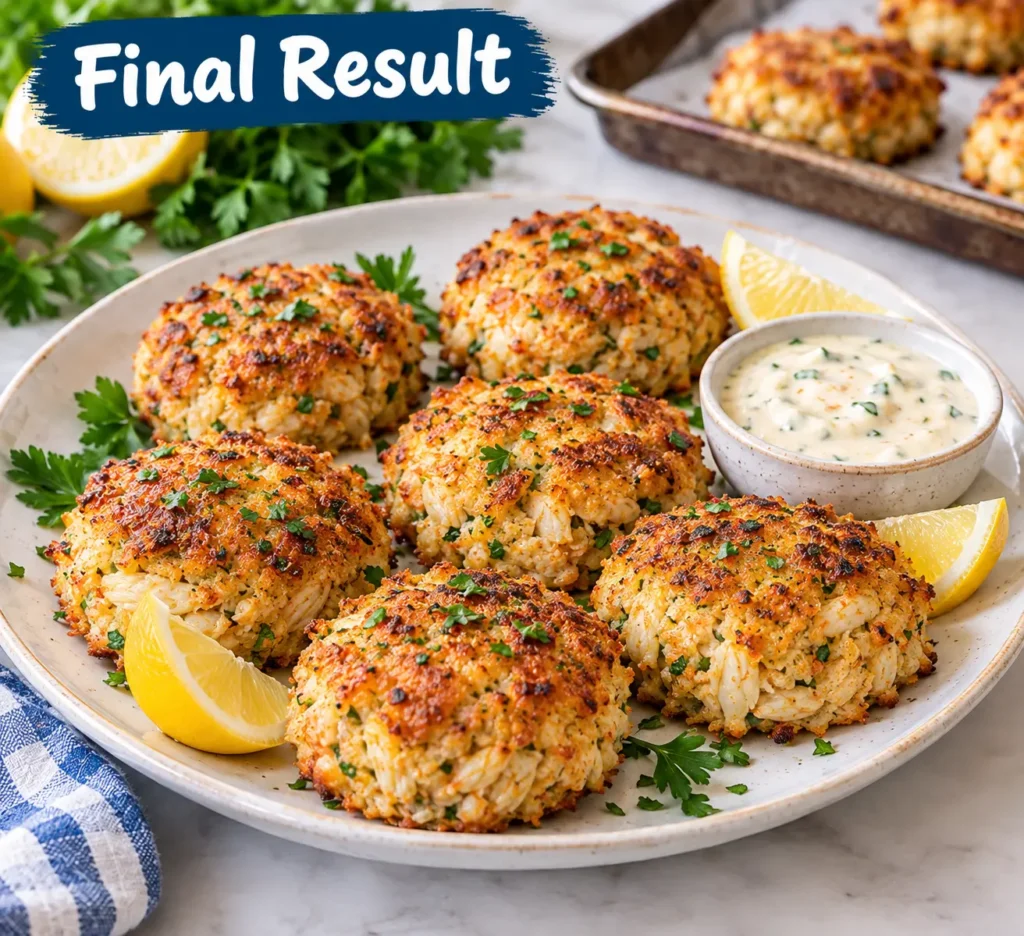
If you love crab cakes but want a recipe that keeps the focus on the crab instead of a heavy breadcrumb filling, these easy crab cakes are a great choice. They are lightly mixed with mayonnaise, Dijon mustard, Worcestershire sauce, lemon juice, parsley, and Old Bay seasoning, then baked until golden on the outside and tender inside.
The key to good crab cakes is simple: use enough crab, handle the mixture gently, and give the shaped cakes time to chill before baking. Chilling helps the cakes hold their shape while they cook.
This recipe makes 6 crab cakes and takes about 60 minutes from start to finish, including chilling time.
Recipe tip: If your crab meat is very wet, drain it well before mixing. Excess moisture is one of the easiest ways to end up with crab cakes that fall apart.
This recipe follows the classic maryland crab cake approach: just enough binder to hold things together, and a lot of crab. The one step I’d never skip is chilling. Thirty minutes in the fridge is what keeps the cakes from falling apart in the oven.
Table of Contents
Why You’ll Love This Crab Cake Recipe
There are several reasons this recipe works well for a simple homemade dinner:
- Plenty of crab flavor: The recipe uses 1 pound of jumbo lump crab meat.
- Light binder: Panko breadcrumbs help hold the cakes together without making them dense.
- Easy preparation: There is no complicated coating or deep-frying required.
- Crispy outside: Baking at a high temperature helps the surface become golden.
- Make-ahead friendly: You can shape and chill the crab cakes before baking.
- Easy to customize: Adjust the seasoning or add a little heat with hot sauce or cayenne pepper.
Ingredients You’ll Need
For the Crab Cakes
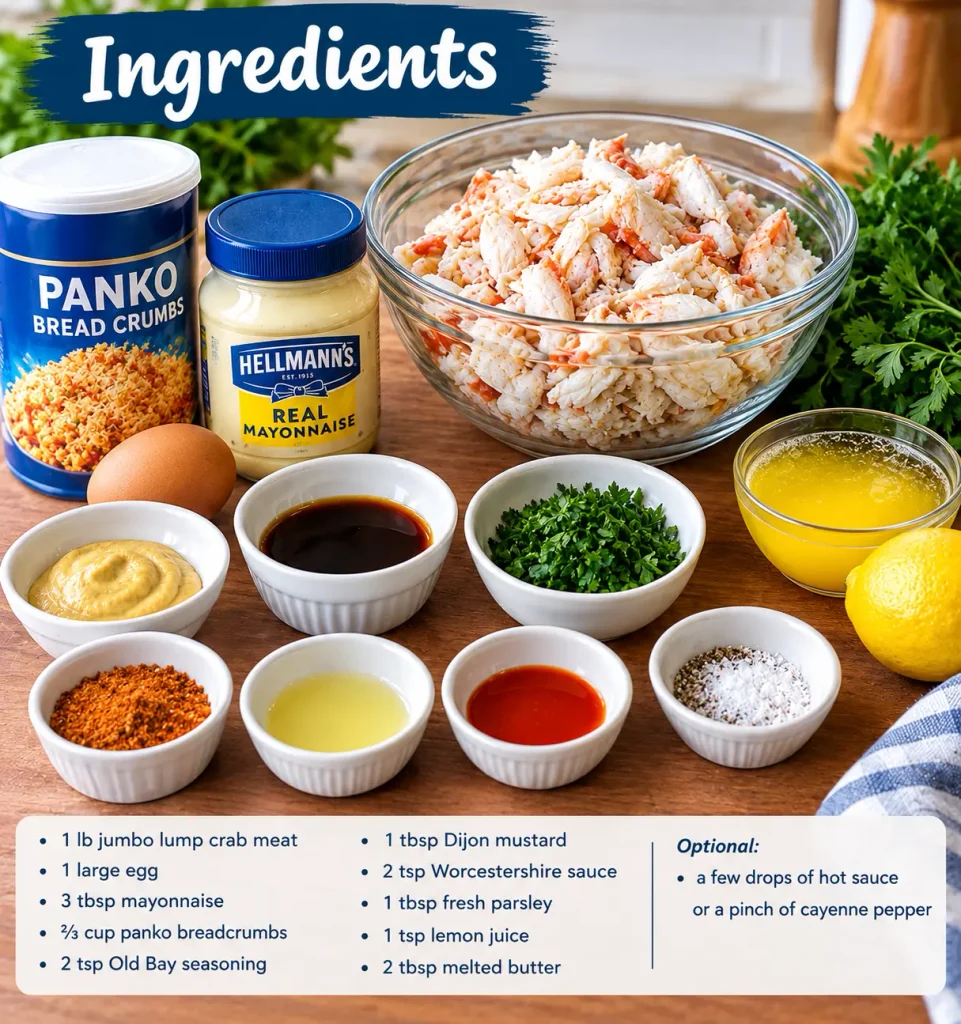
- 1 pound jumbo lump crab meat, picked over for shells
- 1 large egg
- 3 tablespoons mayonnaise
- ⅔ cup panko breadcrumbs
- 2 teaspoons Old Bay seasoning
- 1 tablespoon Dijon mustard
- 2 teaspoons Worcestershire sauce
- 1 tablespoon finely chopped fresh parsley
- 1 teaspoon fresh lemon juice
- 2 tablespoons melted butter, for brushing
- Optional: a few drops of hot sauce or a pinch of cayenne pepper
Why Each Ingredient Matters
Jumbo lump crab meat:
This is the main ingredient, so choose crab meat you enjoy eating on its own. Jumbo lump gives the cakes a satisfying texture and visible pieces of crab.
Egg:
The egg helps bind the mixture together while baking.
Mayonnaise:
A small amount adds moisture and richness without requiring a large amount of filler.
Panko breadcrumbs:
Panko provides structure while keeping the texture lighter than using a large quantity of traditional breadcrumbs.
Dijon mustard and Worcestershire sauce:
These add savory depth and help balance the natural sweetness of the crab.
Lemon juice:
A little acidity brightens the overall flavor.
Old Bay seasoning:
It gives the crab cakes a classic seafood-seasoning profile. If you prefer less salt or a milder flavor, start with less and adjust the mixture before shaping.
How to Choose Crab Meat for Crab Cakes
For the best texture, jumbo lump crab meat is an excellent option because the larger pieces remain noticeable after mixing.
You can also use other types of cooked crab meat if jumbo lump is unavailable. The important thing is to check the meat carefully for shell fragments and remove excess liquid before adding it to the bowl.
If you’re buying fresh seafood, look for properly refrigerated or iced products and avoid seafood with a strong sour, rancid, or ammonia-like smell. The FDA recommends keeping seafood properly chilled and handling it separately from ready-to-eat foods.
How to Make Crab Cakes
Step 1: Prepare the Crab Meat
Place the crab meat in a bowl and gently pick through it with your fingers.
Remove any small pieces of shell or cartilage you find.
If the crab meat contains noticeable liquid, drain it before continuing. You don’t want the mixture to become unnecessarily wet.
Don’t squeeze the crab aggressively. The goal is to remove excess moisture while keeping the crab pieces intact.
Step 2: Mix the Wet Ingredients
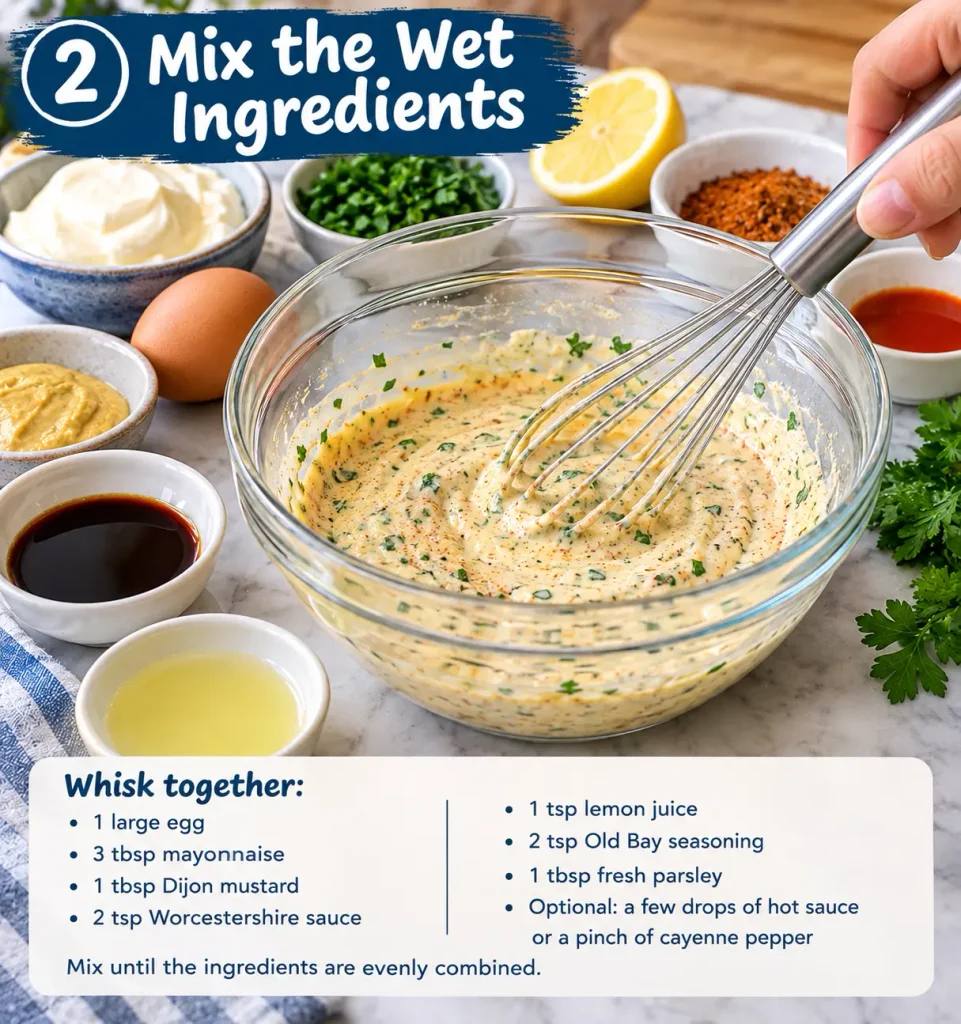
In a separate bowl, whisk together:
- Egg
- Mayonnaise
- Dijon mustard
- Worcestershire sauce
- Lemon juice
- Old Bay seasoning
- Parsley
- Optional hot sauce or cayenne
Mix until the ingredients are evenly combined.
This step distributes the seasoning before it is added to the crab, which helps prevent overmixing later.
Step 3: Combine the Crab and Breadcrumbs
Add the crab meat and panko breadcrumbs to the bowl with the wet mixture.
Using a spatula or clean hands, gently fold everything together.
Do not overmix.
You want the mixture to hold together while still keeping visible pieces of crab. If you mash the crab too much, the finished cakes can become dense instead of tender.
If the mixture feels very loose, add a small amount of panko at a time. Avoid adding a large amount all at once because too many breadcrumbs can make the crab cakes dry.
Step 4: Shape the Crab Cakes
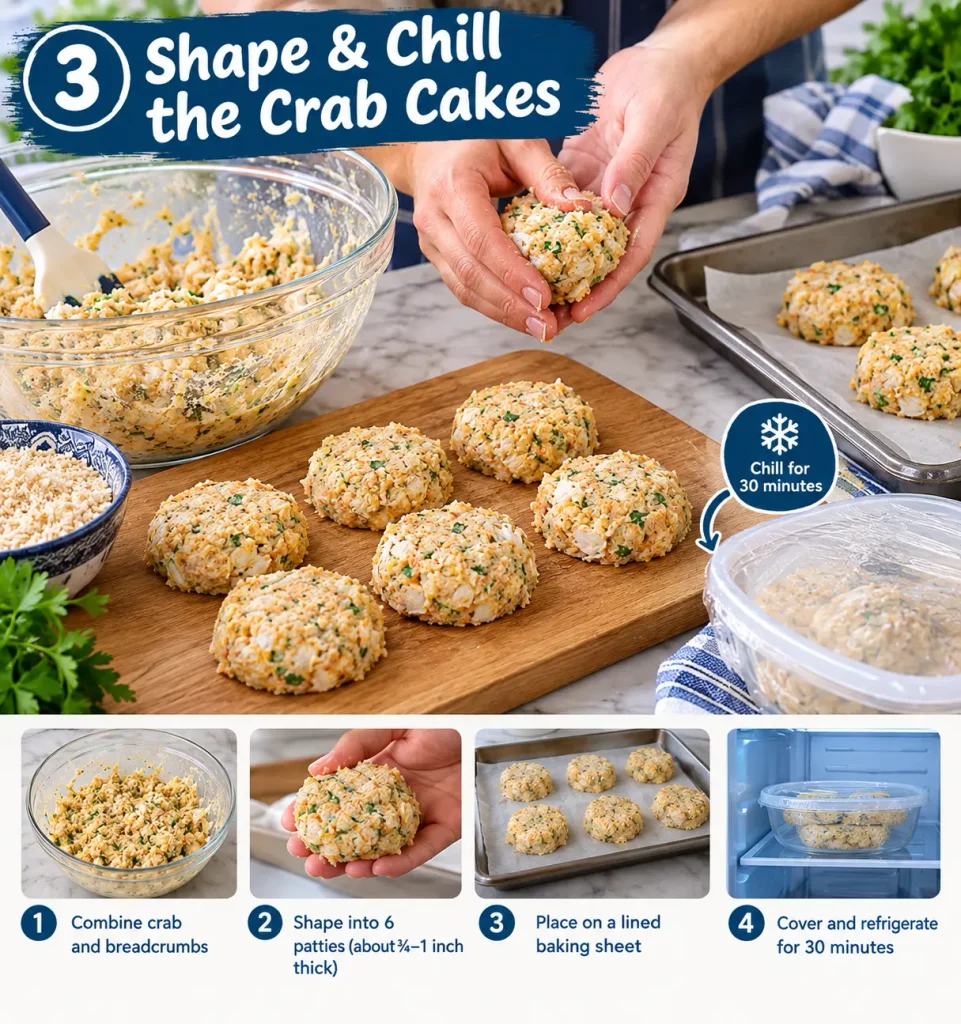
Divide the mixture into 6 portions.
Shape each portion into a compact patty about ¾ to 1 inch thick.
Don’t press the cakes excessively. They should be firm enough to hold their shape but still have a delicate texture.
Place the shaped crab cakes on a parchment-lined baking sheet or plate.
Step 5: Chill Before Baking
Cover the crab cakes and refrigerate them for about 30 minutes.
This is an important step because it gives the mixture time to firm up before it goes into the oven.
If you are preparing them ahead of time, you can keep the shaped crab cakes refrigerated until you’re ready to bake them.
Step 6: Bake Until Golden
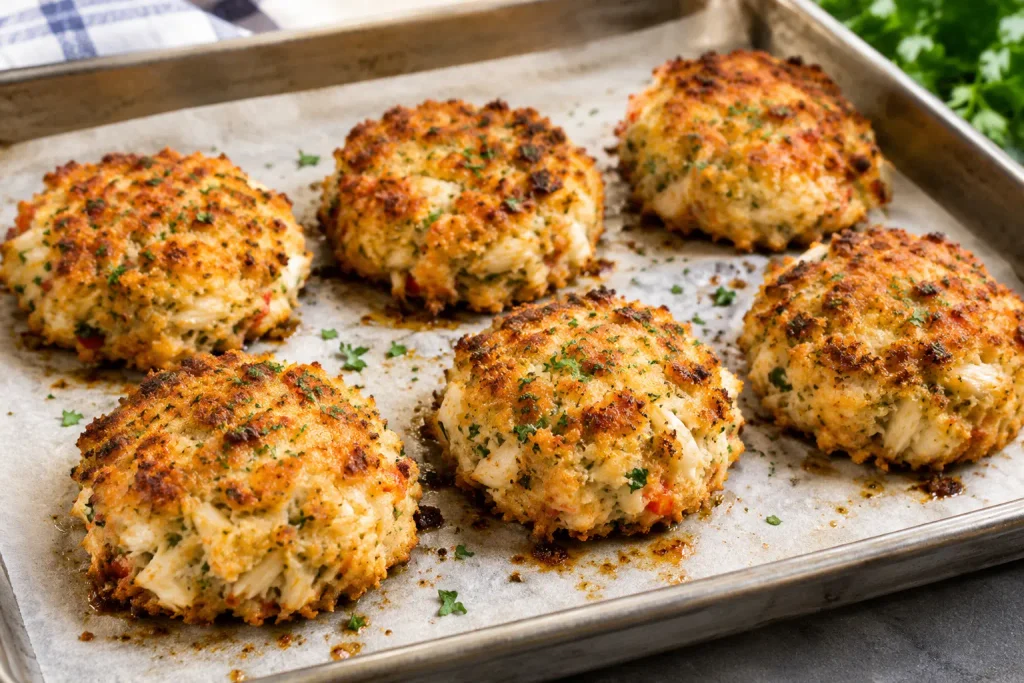
Preheat your oven to 450°F (232°C).
Place the chilled crab cakes on a lightly greased or parchment-lined baking sheet.
Brush the tops lightly with melted butter.
Bake for approximately 12–15 minutes, or until the crab cakes are heated through and the outside is golden.
For food safety, seafood should be cooked properly; the FDA lists 145°F as the general safe internal temperature for most seafood, while cooked crab should have firm, pearly, opaque flesh.
Because oven temperatures and crab cake thickness can vary, use appearance and temperature together rather than relying only on the cooking time.
How to Tell When Crab Cakes Are Done
Your crab cakes should be:
- Golden around the edges
- Firm enough to hold their shape
- Hot in the center
- Slightly crisp on the outside
- Tender and moist inside
If you have an instant-read thermometer, checking the center is a useful extra safety step.
Avoid leaving them in the oven much longer than necessary. Overcooking can dry out the crab and make the texture less tender.
7 Tips for Better Homemade Crab Cakes
1. Don’t Overmix
Gentle mixing keeps the crab pieces intact and gives you a better texture.
2. Drain Wet Crab Meat
Excess moisture can make the mixture difficult to shape.
3. Don’t Use Too Much Breadcrumb
Panko is there to bind the ingredients, not to become the main ingredient.
4. Chill the Shaped Cakes
A short refrigeration period helps the patties firm up before baking.
5. Keep the Cakes Similar in Size
Uniform crab cakes cook more evenly.
6. Don’t Flatten Them Too Much
A little thickness helps keep the center moist.
7. Let Them Rest Briefly
After baking, let the crab cakes rest for a few minutes before serving. This makes them easier to move without breaking.
Easy Ingredient Substitutions
Can I Use Regular Breadcrumbs Instead of Panko?
Yes. Regular breadcrumbs can work, although the texture may be slightly denser.
Start with a little less than the full amount and add more only if needed.
Can I Use Canned Crab Meat?
Yes. Canned crab can be convenient for this recipe.
Drain it thoroughly and check carefully for shell pieces before mixing.
The final texture may be slightly different from crab cakes made with fresh jumbo lump crab meat.
Can I Replace Mayonnaise?
You can use plain Greek yogurt for a lighter variation, although it will change the flavor and texture slightly.
For the closest classic crab-cake texture, mayonnaise is the better choice.
Can I Make Them Gluten-Free?
Use certified gluten-free breadcrumbs instead of regular panko.
Also check the labels of your other packaged ingredients, especially seasoning blends and Worcestershire sauce.
Baked vs. Fried Crab Cakes
This recipe uses baking because it is straightforward and requires less hands-on cooking.
Baking also avoids the need to manage a pan of hot oil.
If you prefer a fried crab cake, you can cook the shaped patties in a skillet with a small amount of cooking oil or butter until both sides are golden and the center is hot.
The cooking time will depend on the thickness of the crab cakes.
For a first attempt, baking is often the easier method because the heat surrounds the cakes more evenly.
What to Serve With Crab Cakes
Crab cakes work well as an appetizer, lunch, or light dinner.
Try serving them with:
- Lemon wedges
- Tartar sauce
- Remoulade sauce
- Garlic aioli
- Coleslaw
- Green salad
- Roasted vegetables
- French fries
- Potato salad
- Steamed vegetables
For a simple dinner, serve two crab cakes with a fresh salad and lemony sauce.
For a party, make smaller crab cakes and serve them as appetizers with dipping sauce.
Related Recipe
If you enjoy seafood-based dinners, you may also like our Easy Cuban Chicken and Rice Recipe for a completely different, comforting main dish.
Easy Crab Cake Sauce
A simple sauce can make these crab cakes even better.
Mix together:
- ½ cup mayonnaise
- 1 tablespoon lemon juice
- 1 teaspoon Dijon mustard
- 1 teaspoon chopped parsley
- A small pinch of Old Bay seasoning
- Optional hot sauce
Taste and adjust the lemon juice or seasoning to your preference.
Keep the sauce refrigerated until you’re ready to serve it.
How to Store Crab Cakes
If you have leftover cooked crab cakes, refrigerate them promptly in a covered container.
The FDA recommends refrigerating perishable foods, including seafood, within two hours of cooking or purchasing, or within one hour when temperatures are above 90°F (32°C).
For best quality, use refrigerated leftovers promptly and keep your refrigerator at 40°F (4°C) or below.
How to Reheat Crab Cakes
For the best texture, reheat crab cakes in a preheated oven at about 350°F (175°C) until heated through.
Avoid overheating them because crab meat can become dry.
An air fryer can also work well for reheating and may help restore some crispness to the exterior.
Can You Freeze Crab Cakes?
Yes.
You can freeze shaped, uncooked crab cakes or freeze cooked crab cakes after they have cooled properly.
For uncooked crab cakes:
- Shape the patties.
- Place them on a lined tray.
- Freeze until firm.
- Transfer them to a freezer-safe container or bag.
- Separate layers with parchment paper.
When ready to cook, follow a safe cooking method and allow additional cooking time as needed.
For the best texture, avoid repeatedly thawing and refreezing seafood.
Make-Ahead Instructions
Crab cakes are convenient for entertaining because you can prepare the mixture ahead of time.
Shape the crab cakes, cover them, and refrigerate until you’re ready to bake them.
This allows you to prepare the main part of the recipe before guests arrive.
Keep the crab mixture refrigerated during preparation, and don’t leave seafood sitting at room temperature unnecessarily.
Common Crab Cake Mistakes
Using Too Much Breadcrumb
The more binder you add, the less prominent the crab flavor becomes.
Skipping the Chilling Step
Warm, freshly shaped crab cakes are more delicate and can be difficult to handle.
Overmixing
Aggressive mixing breaks apart the crab and creates a heavier texture.
Using Wet Crab Meat
Excess liquid can make the mixture loose and difficult to shape.
Making Uneven Patties
Very thick crab cakes take longer to heat through, while very thin ones can dry out quickly.
Try to make all six cakes similar in thickness.
Frequently Asked Questions
Why Do My Crab Cakes Fall Apart?
The most common reasons are too much moisture, insufficient chilling, or too little binder.
Drain wet crab meat well, handle the mixture gently, and refrigerate the shaped cakes before baking.
Should I Use Fresh or Canned Crab?
Both can work.
Fresh jumbo lump crab meat gives you larger pieces and a more luxurious texture, while canned crab can be more convenient and budget-friendly.
Can I Make Crab Cakes the Night Before?
Yes. Shape the crab cakes, cover them, and refrigerate them until you’re ready to cook.
Can I Fry These Crab Cakes?
Yes. Pan-frying is an alternative to baking. Use enough oil or butter to prevent sticking and cook until the outside is golden and the center is hot.
What Sauce Goes Best With Crab Cakes?
Tartar sauce, remoulade, garlic aioli, and lemon-based sauces all work well.
How Do I Keep Crab Cakes Moist?
Avoid overcooking them and don’t add excessive breadcrumbs. The mixture should contain enough moisture to stay tender while still holding its shape.
Can I Use Frozen Crab Meat?
Yes, provided it has been thawed safely and kept properly refrigerated. The FDA recommends thawing seafood in the refrigerator, in cold water, or using the microwave when it will be cooked immediately afterward.
Easy Crab Cake Recipe Card
Recipe: Easy Baked Crab Cakes
Yield: 6 crab cakes
Prep Time: 15 minutes
Chill Time: 30 minutes
Cook Time: 12–15 minutes
Total Time: About 60 minutes
Ingredients
- 1 lb jumbo lump crab meat
- 1 large egg
- 3 tbsp mayonnaise
- ⅔ cup panko breadcrumbs
- 2 tsp Old Bay seasoning
- 1 tbsp Dijon mustard
- 2 tsp Worcestershire sauce
- 1 tbsp fresh parsley
- 1 tsp lemon juice
- 2 tbsp melted butter
- Optional hot sauce or cayenne
Instructions
- Pick through the crab meat and remove shell pieces.
- Drain excess liquid from the crab.
- Whisk together the egg, mayonnaise, Dijon, Worcestershire sauce, lemon juice, Old Bay, parsley, and optional hot sauce.
- Gently fold in the crab and panko.
- Divide the mixture into 6 portions and shape into patties.
- Refrigerate for 30 minutes.
- Preheat the oven to 450°F (232°C).
- Place crab cakes on a lined baking sheet.
- Brush lightly with melted butter.
- Bake for 12–15 minutes, or until golden and heated through.
- Rest for a few minutes before serving.
Food Safety Notes
Seafood needs careful handling from the moment you buy it until the leftovers are stored.
Keep crab refrigerated, wash hands and utensils after handling raw seafood, and prevent raw seafood from coming into contact with ready-to-eat foods.
The FDA recommends keeping refrigerators at 40°F (4°C) or below and refrigerating seafood and other perishables promptly.
For additional seafood-handling guidance, see the FDA‘s official seafood safety guide.
Nutrition Information
Nutrition can vary considerably depending on the type and brand of crab meat, mayonnaise, breadcrumbs, seasoning, and other ingredients used.
For that reason, this recipe does not claim an exact calorie, protein, sodium, or fat value unless the ingredients and product labels are entered into a reliable nutrition calculator.
For general food-composition research, the USDA FoodData Central database provides nutrient information for foods and ingredients.
Final Thoughts
These easy baked crab cakes are all about keeping the crab at the center of the dish.
The most important techniques are simple: use good crab meat, drain excess moisture, avoid overmixing, shape the cakes gently, and chill them before baking.
Once you have the basic method down, you can easily adjust the seasoning, add a little heat, or serve the crab cakes with your favorite sauce.
Whether you’re making them for a weeknight dinner, a seafood lunch, or a special gathering, this recipe gives you a simple way to make golden, tender crab cakes at home without complicated preparation.
Recipe Notes
- Drain very wet crab meat before mixing.
- Don’t overmix the crab.
- Chill the shaped cakes before baking.
- Adjust Old Bay seasoning to your taste.
- Use gluten-free panko for a gluten-free version.
- Refrigerate seafood promptly after preparation and serving.
- For the best texture, avoid overcooking the crab cakes.
Leave a Reply