

A good cheesy potato ball should give you two things in the same bite: a crisp, golden coating and a soft potato center with melted cheese tucked inside. The disappointing ones tend to be soggy, fall apart in the oil, or lose their cheese before they reach the plate.
Fortunately, those problems are usually avoidable.
These homemade cheesy potato balls are made with seasoned mashed potatoes, small cubes of low-moisture mozzarella, and a crunchy breadcrumb coating. They’re a lovely appetizer for sharing, but they’re just as welcome as an afternoon snack with a bowl of marinara or garlic dipping sauce.
The recipe isn’t complicated. The details that matter most are drying the potatoes after boiling, keeping the cheese completely enclosed, and giving the shaped balls a little time to firm up before cooking.
Table of Contents
Cheesy Potato Balls at a Glance
- Yield: About 16 potato balls
- Servings: 4, approximately 4 balls each
- Hands-on preparation: 30–35 minutes
- Boiling the potatoes: 15–20 minutes after the water comes to a boil
- Cooling and chilling: Approximately 30–35 minutes combined
- Frying: About 15–20 minutes total, in batches
- Total time: Allow approximately 1 hour 30 minutes to 1 hour 50 minutes, depending on preparation and batch size.
- Main cooking method: Deep-frying
- Other options: Air fryer or oven
The times are estimates. Larger potato chunks may need a few extra minutes to soften, and the mashed potatoes should be cool enough to handle before you start shaping them.
What Makes These Potato Cheese Balls Work?
This recipe uses a few simple techniques rather than a long ingredient list.
The potatoes are cooked without milk or butter. That may sound unusual if you’re used to making creamy mashed potatoes, but a drier mixture is easier to shape around the cheese.
A little cornstarch helps the potato mixture hold together. You want enough structure to form a ball without making the inside dense or rubbery.
The mozzarella goes in as a cube, not shredded cheese mixed throughout. Keeping it in the middle creates a distinct melted center and makes the outside easier to seal.
Flour, egg, and breadcrumbs create the crust. The flour gives the egg something to cling to, while the breadcrumbs provide the crisp exterior.
The result depends as much on handling the potatoes as it does on the ingredients themselves.
Ingredients for Cheesy Potato Balls
This recipe makes approximately 16 small to medium potato balls.

For the Potato Mixture
- 1½ pounds (680 g) russet or Yukon Gold potatoes, weighed before peeling
- 3 tablespoons cornstarch
- ½ teaspoon garlic powder
- ½ teaspoon paprika
- ½ teaspoon fine salt (adjust to taste)
- ¼ teaspoon ground black pepper
- 1 tablespoon finely chopped parsley, optional
For the Cheese Filling
- 5 ounces (140 g) low-moisture mozzarella cheese, cut into 16 small cubes
For the Crispy Coating
- ⅓ cup all-purpose flour
- 1–2 large eggs, lightly beaten
- 1¼ cups panko breadcrumbs, plus a little extra if needed
- Neutral vegetable oil, such as canola or sunflower oil, for frying
Which Ingredients Matter Most?
Potatoes: Russets are naturally fluffy and can make a lighter potato center. Yukon Gold potatoes have a creamier texture. Both are suitable, but the potatoes need to be thoroughly drained before you mash them.
Mozzarella: Use low-moisture mozzarella from a block. Fresh mozzarella packed in liquid contains more moisture and is more likely to cause trouble inside the potato balls.
Cornstarch: Three tablespoons is a reasonable starting point for this amount of potato. Don’t add extra automatically. First allow the mashed potatoes to cool, then judge the texture.
Breadcrumbs: Panko creates a rougher, lighter crust. Ordinary dried breadcrumbs also work, but the coating will be finer and less textured.
Eggs: Start with one beaten egg for dipping. If you run out before coating all 16 balls, beat the second. This helps avoid wasting an egg unnecessarily.
How to Make Cheesy Potato Balls
You don’t need special equipment beyond a saucepan, a few bowls, and a thermometer if you’re frying. A potato masher, slotted spoon, and wire rack are also useful.
Step 1: Boil the Potatoes
Peel the potatoes and cut them into similar-sized chunks, roughly 1½ inches across.
Add the chopped potatoes to a pot, then pour in cold water until they’re just covered. Bring the water to a boil, then cook until the potatoes are tender, about 15–20 minutes after boiling begins.
Check a larger piece with a fork. It should slide in easily without meeting a hard center.
Drain the potatoes well. After draining, leave the potatoes in the warm pot for 2–3 minutes with the heat off. This helps them dry out a little before mashing.
Why this matters: Water left in the potatoes can make the mixture sticky and difficult to shape. Removing moisture now is easier than trying to fix an overly wet mash later.
Step 2: Mash and Season
Mash the potatoes with a potato masher until they’re mostly smooth, with no big chunks left.
Set them aside for approximately 10–15 minutes, or until they’re cool enough to handle comfortably. To help the potatoes cool a little faster, move the mash into a wide, shallow bowl and spread it out.
Sprinkle the cornstarch, garlic powder, paprika, salt, and pepper over the cooled potatoes. Add the parsley too, if you’re using it. Mix gently until everything is evenly distributed.
Avoid adding milk, cream, or melted butter. This mixture needs to hold its shape rather than behave like soft mashed potatoes served as a side dish.
Step 3: Check the Potato Mixture
Before filling every potato ball, take a small spoonful of the mixture and roll it between your palms.
It should form a ball without immediately flattening or breaking apart.
If it sticks heavily to your fingers, allow it to cool a little longer. If it is still too wet, mix in another teaspoon of cornstarch and check again. Add more only if necessary.
If the mixture cracks because it feels dry and crumbly, press and knead a small portion gently before adding anything else. Sometimes it simply needs to be brought together more firmly.
This quick check is worth doing. It can save you from shaping an entire tray of potato balls that won’t hold together.
Step 4: Add the Mozzarella Filling
Divide the seasoned potato mixture into 16 approximately equal portions.
Flatten one portion into a small disc in the palm of your hand. Place a cube of mozzarella in the center.
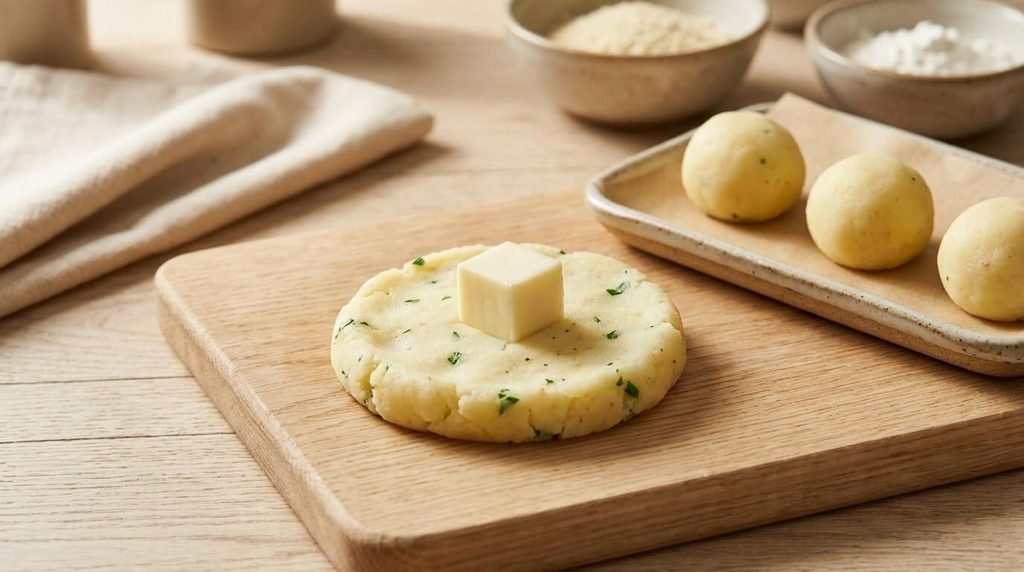
Bring the potato up and around the cheese, pinch the edges together, and gently roll it into a round ball.
The mozzarella should be completely covered.
Pay particular attention to the seam where the potato meets. If you can see cheese or a visible crack, smooth a little extra potato mixture over that spot.
Repeat with the remaining portions.
Helpful tip: A smaller cheese cube is easier to enclose than a large one. About 9 g of mozzarella per ball is a useful guide with the quantities in this recipe.
Step 5: Chill the Shaped Balls
Place the potato balls on a parchment-lined tray or plate.
Refrigerate for about 20 minutes, or until the outside feels slightly firmer.
Chilling makes the balls easier to handle during coating and reduces the chance of damaging their shape.
When you’re ready to coat the potato balls, take a few out of the fridge at a time and leave the rest chilled.
Step 6: Coat with Flour, Egg, and Breadcrumbs
Set up three shallow bowls:
- Flour in the first bowl.
- Beaten egg in the second.
- Panko breadcrumbs in the third.
Roll one chilled potato ball lightly through the flour. Shake away the excess.
Dip it in the beaten egg until the surface is covered, then roll it in the panko. Press the crumbs on gently so they adhere without flattening the ball.
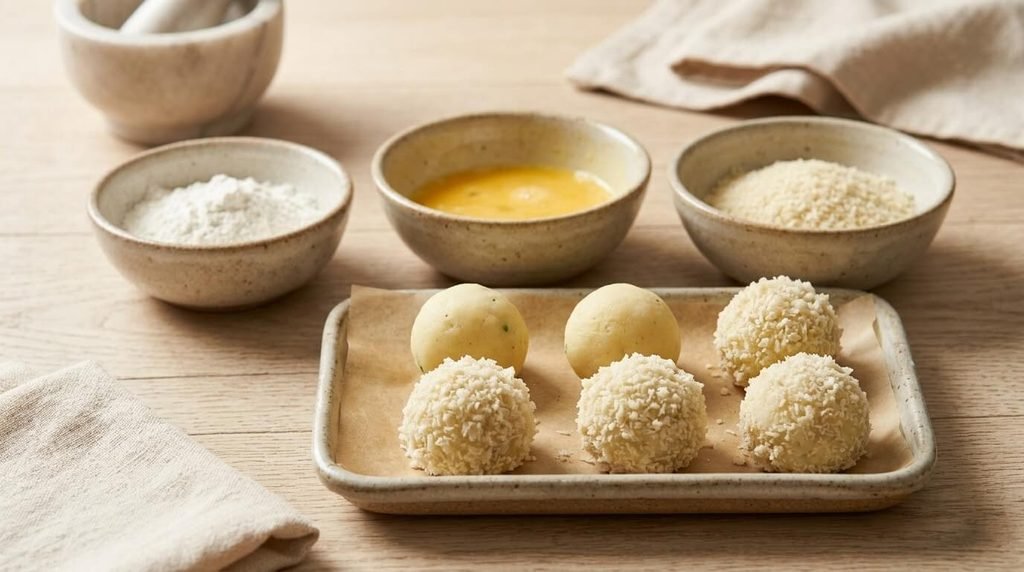
Repeat with the rest.
If the coating looks thin in a few places, add a little more breadcrumb coverage before cooking. Any exposed potato can become a weak spot in the crust.
Once you’ve finished coating all the potato balls, leave them on the tray and start heating the oil.
Step 7: Fry Until Golden and Crisp
Start with a deep pot that has a thick bottom and sits securely on your stove.
Add enough neutral vegetable oil to submerge the potato balls, but keep the pot no more than one-third full to leave room for bubbling and reduce the risk of oil spilling over.
Heat the oil to 350°F (175°C), checking with a kitchen thermometer.
Carefully lower about four potato balls into the oil, depending on the size of your pot. Avoid dropping them in or overcrowding the pot.
Fry for approximately 3–4 minutes per batch, turning gently if necessary, until the outside is evenly golden and crisp.
Lift the cooked potato balls out with a slotted spoon and let them drain on a wire rack set over a tray. Before adding the next batch, check the oil temperature and wait until it’s back at 350°F (175°C) if needed.
For the first batch: Cook one potato ball, let it cool briefly, and cut it open. If the coating is golden but the mozzarella hasn’t softened enough, make the next batch slightly longer while keeping the oil temperature steady.
Stay close to the stove while the oil is hot, and make sure no water splashes into the pot.
Step 8: Let Them Rest Briefly and Serve
Give the cooked potato balls a minute or two to cool before serving. The cheese in the middle can be much hotter than the outside suggests.
Arrange them on a plate with marinara sauce, garlic aioli, or another favorite dip.
Don’t wait too long to dig in. The coating gradually loses its crunch as the potato balls cool.
Why Do Cheesy Potato Balls Fall Apart?
A potato ball that holds together on the tray but breaks in the oil is frustrating. The table below will help you figure out what went wrong and what you can adjust for the next batch.
| Problem | Likely cause | What helps |
| Mixture is too sticky | Potatoes contain too much moisture | Drain and steam-dry well; cool before shaping |
| Balls flatten on the tray | Potato mixture is too soft | Chill and check whether a little more cornstarch is needed |
| Cheese leaks out | Filling is exposed or the seam is thin | Use smaller cheese cubes and seal cracks completely |
| Crust is greasy | Oil temperature has dropped | Cook only a few potato balls at a time, and check that the oil stays close to 350°F (175°C). |
| Outside browns too quickly | Oil is too hot | Lower the heat and return toward 350°F |
| Breadcrumbs fall off | Coating wasn’t applied evenly | Use the flour–egg–breadcrumb sequence |
| Centers seem dense | Too much starch or excessive mixing | Add starch gradually and mix only until combined |
Do the Potato Balls Need Extra Flour?
Not necessarily.
If the mixture feels sticky while still warm, the first thing to try is cooling it. Adding flour too early can leave you with a heavy potato center.
Cornstarch already gives this recipe a little extra structure. Make small adjustments only after checking the consistency.
What If the Cheese Still Leaks?
Check the potato layer around the filling. If the cheese cube is too big, there might not be enough potato around it to keep everything together.
If you notice a crack, pinch the potato back together and smooth the surface with your fingers before adding the breadcrumbs.
Can You Make Cheesy Potato Balls in an Air Fryer?
Yes! If you’d rather skip the pot of hot oil, an air fryer is a handy option, especially when you’re making a small batch.
The texture won’t be exactly the same as deep-frying. The outside may be a little drier, and browning depends on how well the crumbs are coated with oil.
Air Fryer Instructions
- Preheat the air fryer to 390°F (200°C).
- Lightly spray the breaded potato balls with oil.
- Arrange them in a single layer, leaving a little space between each ball.
- Air fry for approximately 10–13 minutes, turning gently halfway through.
- Check that the coating is crisp and the cheese has softened before serving.
If the crumbs remain pale, a little additional oil spray can help them brown. Avoid soaking them with oil.
Air fryer models vary, so treat the time as a starting point and check the first batch before deciding how long the rest need.
How to Bake Potato Cheese Balls in the Oven
Baking is another option if you want to prepare a larger batch without deep-frying.
Preheat the oven to 425°F (220°C).
Arrange the breaded potato balls on a parchment-lined baking sheet, leaving space between them. Spray or lightly brush the coating with oil.
Bake for approximately 18–22 minutes, turning carefully halfway through, until golden and heated through.
Oven-baked potato balls can be less evenly browned than fried ones. If you want a deeper golden color, you can lightly toast the panko in a dry skillet before using it for the coating. Let the breadcrumbs cool before breading the potato balls.
Keep an eye on the potato balls as they bake. Take them out when the coating has a nice, light golden color. Let one cool for a minute or two, then gently break it apart to see if the mozzarella has melted in the middle.
Which Cooking Method Should You Choose?
| Method | Texture | Best for |
| Deep-frying | Most evenly golden and crunchy | Classic crispy potato balls |
| Air fryer | Crisp with less oil; browning may vary | Small batches and easy cleanup |
| Oven | Lightly crisp; convenient for a tray | Cooking more pieces at once |
The frying method is the main version of this recipe. The oven and air fryer temperatures and times are practical starting estimates, not results from a tested side-by-side comparison.
Flavor Variations Worth Trying
Once you’re comfortable shaping the potato mixture, small changes can give the recipe a different character.
Cheddar and Mozzarella Potato Balls
For this version, cut the mozzarella into slightly smaller pieces and add a little cheddar alongside each one.
Cheddar brings a sharper cheese flavor, while mozzarella gives a softer, stretchier center. Keep the overall filling amount similar so the balls remain easy to seal.
Spicy Potato Cheese Balls
For a little extra heat, mix a small pinch of cayenne or crushed red pepper flakes into the mashed potatoes.
If you’re serving people with different spice preferences, keep the potato mixture mild and offer hot sauce on the side instead.
Garlic and Herb Potato Balls
Mix a little finely chopped chive or parsley into the potatoes.
Use fresh herbs sparingly. Too much added moisture can make the mixture more difficult to handle.
Extra-Crunchy Potato Balls
For a thicker crust, dip the already breaded ball back into the egg and then the breadcrumbs once more.
This can make the coating more substantial, but handle the balls gently so you don’t damage their shape.
What to Serve with Cheesy Potato Balls
With all that creamy potato and melted cheese, a dip with a little tang helps balance out the richness.
Marinara sauce is a simple choice, especially with mozzarella.
Garlic aioli works when you want something creamy. For a quick version, stir a small amount of finely grated garlic and lemon juice into mayonnaise.
Spicy mayonnaise is useful if the potato mixture itself is mildly seasoned. Mix mayonnaise with a little sriracha, then adjust to taste.
For a bigger spread, serve the potato balls alongside a fresh green salad, crunchy vegetables, or other small appetizers.
For a cozy lunch or dinner, try serving these crispy potato balls alongside our easy homemade tomato soup. The warm soup pairs nicely with the crunchy coating and melted cheese.
Serve the dips in small bowls and let everyone help themselves. Pouring sauce over the potato balls too early can make the crispy coating turn soggy.
Can You Prepare Cheesy Potato Balls Ahead of Time?
You can do much of the preparation before you’re ready to cook.
Spread the seasoned mashed potatoes in a shallow container so they cool faster, then cover and refrigerate them promptly. When you’re ready to finish the recipe, take the potato mixture out of the fridge, wrap small portions around the mozzarella, and coat each ball in breadcrumbs.
Alternatively, prepare the shaped and breaded potato balls ahead of time, cover them, and keep them refrigerated until cooking.
For the best handling and coating texture, preparing them the same day or the day before is a practical approach.
Keep the potato mixture and prepared balls refrigerated rather than leaving them on the counter for extended periods.
How to Store and Reheat Leftovers
Refrigerating
Let the cooked potato balls cool briefly, then transfer them to a covered container and refrigerate within 2 hours of cooking, or within 1 hour if the surrounding temperature is above 90°F (32°C).
Use refrigerated leftovers within 3–4 days. For more information on safely storing and reheating cooked food, see the USDA’s guide to leftovers and food safety.
Reheating
The oven or air fryer is usually a better choice than the microwave if you want to restore some of the coating’s crispness.
Spread the potato balls in a single layer and reheat until the centers reach 165°F (74°C).
The exact reheating time depends on the size of the balls, the appliance, and whether they’re coming straight from the refrigerator.
A microwave can heat them through, but the breadcrumb coating will generally be softer.
Freezing
Cooked potato balls can be frozen after cooling safely. Place the potato balls on a tray, leaving a little space between them so they don’t stick together. Freeze them until solid, then move them into a freezer-safe bag or container.
For better eating quality, aim to use them within 1–2 months, although freezing at a constant 0°F (-18°C) keeps properly handled food safe for longer.
Reheat thoroughly to 165°F (74°C). The texture may be slightly different from freshly made potato balls.
Frequently Asked Questions
Will Leftover Mashed Potatoes Work?
Yes, you can use leftover mashed potatoes. Just make sure they were refrigerated promptly and are no more than 3–4 days old.
Keep in mind that mashed potatoes made with lots of milk, butter, or cream can be much softer than the mixture in this recipe. Chill them first and add a little cornstarch if necessary to help them hold their shape.
Will Shredded Mozzarella Work for the Filling?
You can, but small cubes are easier to place in the middle and enclose completely.
If you’re using shredded cheese, press a small amount together before wrapping it in the potato mixture. Avoid overfilling.
Can I Make Potato Cheese Balls Without Eggs?
Yes. For an egg-free coating, try mixing about 2 tablespoons of flour with 3 tablespoons of water to make a thin slurry.
Dip the floured balls into the slurry, then coat them in breadcrumbs. The texture and adhesion may differ slightly from an egg-based coating.
Can I Make Them Gluten-Free?
Use gluten-free flour and gluten-free breadcrumbs, and check the labels of your seasonings and other ingredients.
Potatoes and plain cornstarch are naturally gluten-free, but packaged ingredients should still be checked if you’re preparing food for someone with a gluten-related medical condition.
Why Aren’t My Potato Balls Crispy?
The coating may have absorbed too much oil, the temperature may have been too low, or the cooked balls may have been left on a flat plate where steam collected underneath.
For fried potato balls, maintain a steady oil temperature and drain them on a wire rack.
For air-fried or baked versions, use a light coating of oil and leave space between the balls.
Do You Need to Chill Potato Balls Before Frying?
Chilling is strongly recommended for this version.
It firms up the shaped potatoes and makes coating and transferring them easier. If the mixture is already quite firm, the balls may need less time, but don’t skip checking their shape and seams.
Which Cheese Gives These Potato Balls the Best Stretch?
Low-moisture mozzarella is a reliable option when you want melted cheese that can stretch as the potato ball is pulled apart.
For a little more flavor, add some cheddar to the mozzarella. Just keep mozzarella as the main cheese if you want that stretchy, gooey center.
Final Tips for Better Cheesy Potato Balls
The difference between a potato ball that holds together and one that splits in the oil usually comes down to a handful of small decisions.
Drain the potatoes thoroughly. Give the mashed potatoes a little time to cool before deciding if they need more cornstarch. Use a modest amount of cheese, and cover it with an even layer of potato. Chill the shaped balls, then coat them carefully.
If you’re unsure how they’ll cook, start with one test ball. It’s a simple way to check the seasoning, crust, and melted center before cooking the whole batch.
Serve them warm, bring out a good dipping sauce, and let the crispy potato coating and soft mozzarella filling do the rest.
Leave a Reply