
Choosing ingredients for gluten-free baking starts with understanding what each one does. A suitable flour blend provides the base for many recipes, while starches and binders can influence texture and structure. This guide covers the main pantry essentials, explains what to check on food labels, and shares simple ways to reduce gluten cross-contact when preparing food at home.
Baking success depends on matching ingredients to the job a recipe asks them to do. Cross-contact is the unintentional transfer of gluten to food through shared surfaces, tools, or equipment. When buying packaged foods, check the labels carefully and keep your kitchen tools and surfaces clean to reduce the risk of gluten cross-contact. The aim is fewer surprises, not a pantry makeover overnight.
Table of Contents

Key Takeaways
- Begin with a reliable 1:1 gluten-free flour blend.
- Choose ingredients based on the recipe you plan to bake.
- Packaged products can differ in their gluten-free labeling.
- Cross-contact can happen through shared tools and surfaces.
- Add specialty flours when a recipe calls for them.
Start with ingredients that perform the main jobs in a recipe, then move into the pantry choices.
Essential Ingredients for a Gluten-Free Baking Pantry
Start with a dependable flour blend and a few naturally gluten-free basics, rather than buying every specialty flour at once. A few basic ingredients can work in many recipes, and choosing the right gluten-free products helps you achieve the texture you want in each bake. Choose ingredients for the recipe, not just because they are labeled gluten-free.
Start with a dependable flour blend and a few naturally gluten-free basics, then add specialty ingredients when a recipe needs them.
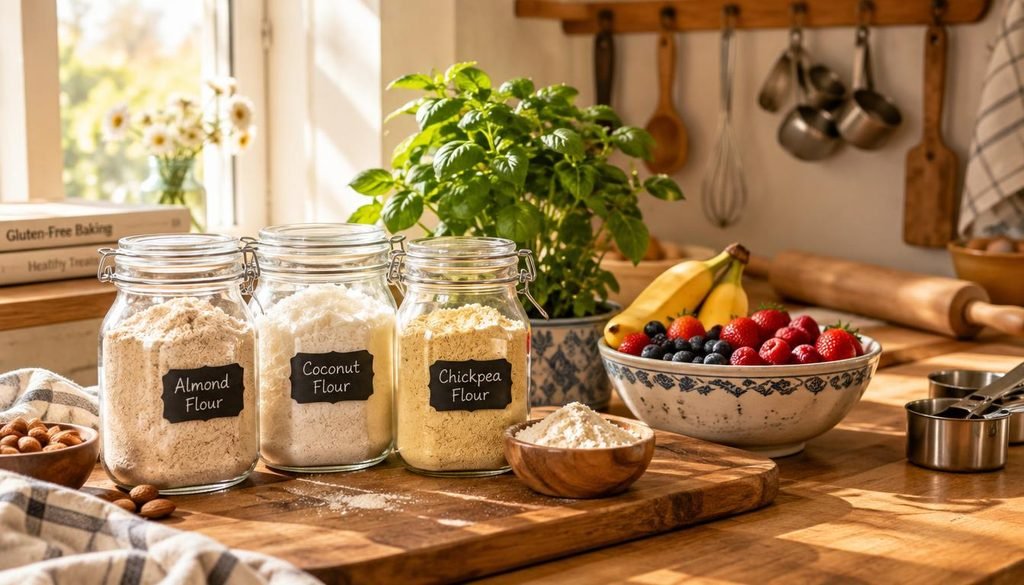
Grains, Starches, and Baking Mixes
Rice, quinoa, buckwheat, and corn can bring variety to meals and baked goods. For variety, consider rice-based, corn-based, lentil, or bean pasta, checking each package for a gluten-free label. Choose oats only when they are labeled gluten-free. These grains and packaged staples can also round out shelf-stable meal components, so your pantry supports more than baking. A gluten-free foods list can be a helpful starting point, but check individual products rather than assuming every version is suitable.
Flours, Binders, and Leaveners
A 1:1 gluten-free flour blend is an easy place to begin because it is made for direct substitution, but blends differ in ingredients and results. Some already contain a binder, so check the blend before adding xanthan gum or guar gum. Almond flour, tapioca starch, potato starch, and cornstarch each affect texture in different ways. Baking soda, baking powder, and yeast are useful leaveners; check their labels, too. Looking for a simple way to use gluten-free ingredients? Try this easy gluten-free dessert recipe for a sweet treat.
| Ingredient | Baking role | Useful application |
|---|---|---|
| Almond flour | Adds moisture and a nutty flavor | Cookies or cakes |
| Tapioca starch | Adds chew and helps bind | Breads or doughs |
| Potato starch | Lightens texture | Flour blends |
| Cornstarch | Thickens | Fillings or sauces |
Foods to Include and Avoid
For gluten-free baking, keep suitable flour blends, starches, baking ingredients, nuts, and seeds on hand. Check packaged products such as chocolate chips, spices, and baking mixes to make sure they meet your gluten-free needs. Flavored products and seasoning blends may have added ingredients, so give them extra attention. A list of gluten-free foods and snacks can help you think beyond baking, but packaged choices still vary. Wheat, barley, rye, triticale, and malt are ingredients to avoid. Keep a short, printable gluten-free list of foods to avoid near your shopping area as a quick reminder. Once you have selected the ingredients that suit your recipes, check how labels and kitchen routines affect their safety.
How to Shop Safely and Store Your Gluten-Free Staples
Two products with similar packaging may contain different ingredients or have different labels, so review each item carefully before purchasing. In the United States, the FDA sets a limit of fewer than 20 parts per million (ppm) of gluten for foods labeled gluten-free. A wheat-free label alone does not guarantee that a product is gluten-free, since gluten can come from sources other than wheat. Even naturally gluten-free ingredients may come into contact with gluten during processing or handling, so review product labels carefully.
Read Labels and Make a Printable Food List
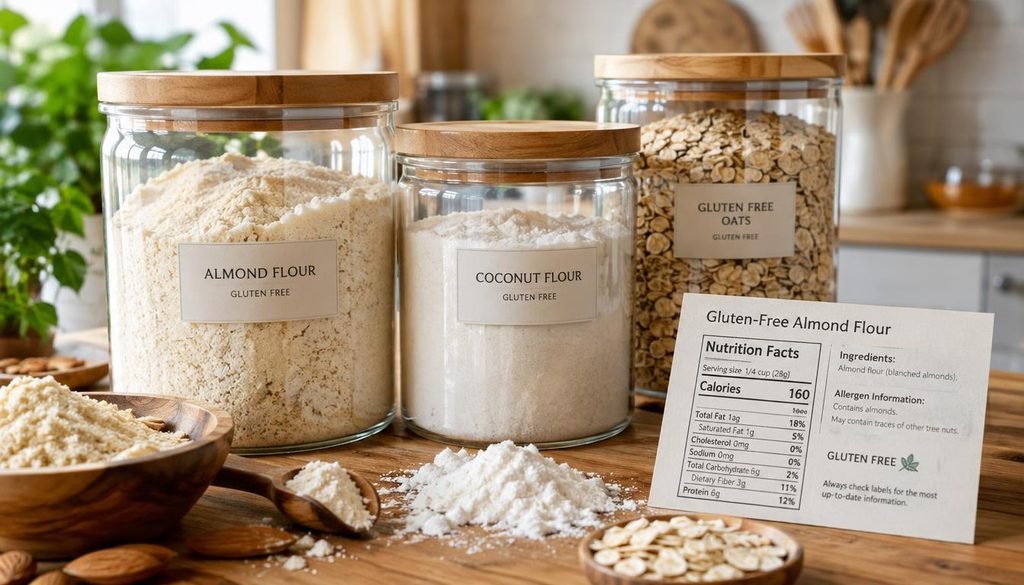
For ingredient label reading, scan for wheat, barley, rye, triticale, and malt, including malt extract or malt vinegar. A gluten-free label is distinct from a third-party certification seal; certification programs set their own criteria, so seals do not all represent the same standard. A free printable gluten-free food list can keep your basics in view:
- A labeled gluten-free flour blend
- Labeled gluten-free oats, if needed
- Baking powder and baking soda
- Beans or lentils
- Plain rice or quinoa
For cross-contact prevention in a shared kitchen, clean surfaces and tools before baking, store gluten-free items above gluten-containing foods, and use separate or dedicated condiments to prevent double-dipping.
Build a Beginner Grocery List on a Budget
A gluten-free grocery list for beginners is easier to manage when you choose ingredients that work across several recipes. For a gluten-free grocery list on a budget, buy store-brand staples when their labels meet your needs and save specialty flours for recipes that call for them. You do not need several kinds of flour before you know which bakes you enjoy.
Move opened ingredients into airtight storage containers, keep the original labels available, and follow package storage directions. This makes it easier to identify contents later and retain the information you need about each product. With a short, label-checked shopping list and a clean storage setup, you can move on to baking without overhauling your whole kitchen.
Conclusion
Your first gluten-free bake does not require a pantry full of specialty products. A reliable flour blend and a few ingredients selected for one specific recipe are a sensible start. That approach keeps shopping focused and gives you a chance to learn how your chosen blend works in your own kitchen.
Choose a simple recipe, check its ingredient list, and buy only what you need for that bake. After you try it, note what worked and add new ingredients only as future recipes call for them. Your pantry can grow at the pace of your baking, one useful ingredient at a time.
FAQ
What foods should I include on my gluten-free grocery list?
Include naturally gluten-free basics such as rice, beans, plain vegetables, and baking ingredients with a gluten-free label. Packaged foods and seasonings still need a label check because ingredients and processing can vary by product. A short list based on meals you already cook can help you avoid buying unfamiliar specialty items that may sit unused.
What are the essential items to have in a gluten-free pantry?
Keep a 1:1 gluten-free flour blend, a binder if the blend does not include one, and baking soda, baking powder, or yeast for recipes that need them. Add only a few flours or starches that match your planned bakes, along with basic whole foods such as rice, beans, and lentils. Your recipe choices should guide what you add next.
Can oats be part of a gluten-free pantry?
Yes, oats can be part of a gluten-free pantry when you choose a package labeled gluten-free. Ordinary oats can be exposed to gluten during growing or processing, so the label matters even though oats themselves are naturally gluten-free. If a recipe calls for oats, use the labeled kind and follow the package directions for storage.
Is a Dedicated Toaster Necessary for Gluten-Free Bread?
A dedicated toaster is a practical way to keep crumbs from shared equipment off gluten-free bread. Toasting gluten-free slices in a toaster that also handles regular bread can expose them to crumbs inside the slots, where wiping the exterior will not reach. If a separate toaster is not practical, use another method that keeps the bread away from shared crumbs.
Do all gluten-free flour blends work as a cup-for-cup substitute?
No, not all gluten-free flour blends work as a cup-for-cup substitute. Look for a blend labeled 1:1 for direct substitution, then check whether the recipe needs a binder such as xanthan gum or guar gum. Some blends already include one, and blends can behave differently, so follow the recipe’s specific directions when available.
Leave a Reply